
NonStop NS14000 Series Planning Guide (H06.13+)

NOTE: OSM does not make dynamic computations based on remaining capacity of the
rack-mounted UPS. The ride-through time is statically configured in SCF for OSM use. For example,
when power comes back before the initiated shutdown, but then fails again shortly afterward, the
UPS has been depleted by some amount and does not last for the ride-through time until it is fully
recharged. OSM does not account for multiple power failures that occur within the recharge time
of the rack-mounted UPS.
Power can be extended by adding ERMs to the configuration; and power for UPS alone can extend
beyond five minutes based on power consumption. To extend the ride-through time beyond three
minutes, use this manual and your UPS documentation to calculate the expected power consumption,
measure the site power consumption, factor in the ERM, if present, and make adjustments. Also
consider air conditioning failures during a real power failure because increased ambient temperature
typically causes the fans to run faster, which causes the system to draw more power. By allowing
for the maximum power consumption and applying those figures to the UPS calculations provided
in the UPS manuals, you can increase the ride-through time beyond three minutes.
Considerations for Site UPS Configurations
OSM cannot monitor a site UPS. The SCF configured ride-through time on a NonStop NS14000
system has no effect if only a site UPS is used. With a site UPS instead of a rack-mounted UPS, the
customer must perform manual system shutdown if the backup generators cannot be started.
It is also possible to have a rack-mounted UPS in addition to a site UPS. Since the site UPS can
supply a whole computer room or part of that room, including required cooling, from the perspective
of OSM, site UPS power can supply the group 100 AC power. The group 100 UPS power
configured in OSM, in this case, would still come from a rack-mounted UPS (one of the supported
models).
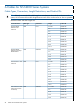
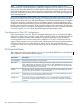
AC Power-Fail States
These states occur when a power failure occurs and an optional HP R5000 UPS or HP R5500 XR
UPS is installed in each cabinet within the system:
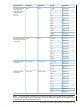
DescriptionSystem State
NonStop operating system is running normally.NSK_RUNNING
OSM has detect a power failure and begins timing the outage. AC power returning terminates
RIDE_THRU and puts the operating system back into an NSK_RUNNING state. At the end of
RIDE_THRU
the predetermined RIDE_THRU time, if AC has not returned, OSM executes a PFAIL_SHOUT that
results in the system going to LOW_POWER.
Normal halt condition. Halted processors do not participate in power-fail handling. A normal
power-on also puts the processors into the HALTED state.
HALTED
Halted-state services (HSS) informs the blade element that it is in LOW_POWER state and then
waits until optic power to the blade element is removed.
LOW_POWER
Loss of optic power from the blade element occurs, or the UPS batteries suppling the blade
elements are completely depleted. When power returns, the system is essentially in a cold-boot
condition.
POWER_OFF
100 Operations and Management Using OSM Applications