
iTP Secure WebServer System Administrators Guide (Version 7.5+)



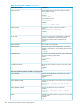
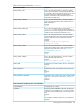
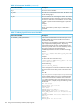

Table 16 Environment Variables (continued)
DescriptionEnvironment Variable
The IP address of the remote host making the request.
If IPv4 address is used:
REMOTE_ADDR
n.n.n.n
Example:
199.170.183.2
If IPv6 address is used:
n:n:n:n:n:n:n:n
Example:
2001:0:0:0:0:FFD3:0:57ab
The request is sent by using this Port number.
Format:
REMOTE_PORT
number-between-1-and-65535
Example:
80
If the server supports user authentication, and the CGI
program is protected, this is the protocol-specific
authentication method used to validate the user.
Example:
AUTH_TYPE
basic
This variable is not supported.REMOTE_IDENT
If the server supports user authentication, and the CGI
program is protected, this is the authenticated user name.
Example:
REMOTE_USER
sandeman
For queries with attached information, such as HTTP POST,
this is the content type of the data.
Format:
CONTENT_TYPE
type/subtype
Example:
text/html
The length of the content (in bytes) as given by the Web
client.
Example:
CONTENT_LENGTH
768
These TLS and SSL environment variables are request specific.
Contains the number of bits in the session key used to
encrypt this session.
Example:
HTTPS_KEYSIZE
128
Contains the name of the issuer of this server's certificate.
Example:
HTTPS_SERVER_ISSUER
CN=Capulet, O=Capulet's House of Keys,
C=Italy
Contains the DN for this server's certificate.
Example:
HTTPS_SERVER_SUBJECT
CN=Juliet, O=Capulet's House of Keys,
C=Italy
Indicates whether the request is using TLS or SSL. The values
are: ON, OFF
Example:
HTTPS
off
148 Using Common Gateway Interface (CGI) Programs