
iTP Secure WebServer System Administrators Guide (Version 7.5+)



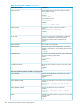
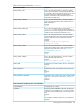
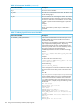

◦ CGI_getc
◦ CGI_puts
• Use other CGI procedures as required by your application. “CGI Procedures” (page 159) lists
and describes all the procedures in the CGI library.
The semantics of CGI routines are identical to the corresponding routines in the standard C
library.
• Link your application code with the CGI library, libcgi.a, to create an executable program.
NOTE: Applications built using a version of libcgi.a that is newer than the version of the iTP
Secure WebServer (httpd process) might not run correctly in the older WebServer environment.
Applications built with a previous version of libcgi.a run correctly with newer versions of the
iTP Secure WebServer.
The iTP WebServer provides CGI library, which supports the IEEE floating-point (libcgi.a),
Tandem floating-point (libcgi_tandem.a), and Neutral floating-point (libcgi_neutral.a).
The CGI library uses the context-sensitive Pathsend interface, as shown in “Pathway CGI Interface”
(page 141). The Pathway CGI interface simulates the behavior of the OSS standard input, output,
and error files.
NOTE: CGI requests and replies can be of any length. For long requests and replies, the httpd
process and the process labeled "Pathway CGI main" exchange multiple Serverclass_send and
reply messages.
Figure 7 Pathway CGI Interface
HTTPD
Pathway CGI Main
Serverclass_send
Reply
CGI_main
Servlet Server Class (SSC)
The Servlet Server Class (SSC) provides a way of executing Java servlets. For details, see NonStop
Servlets for JavaServer Pages (NSJSP) System Administrator's Guide.
CGI Configuration and Programming
To use CGI programs in the iTP Secure WebServer environment, you be familiar with the following:
• How to configure CGI programs and server classes
See “Configuring for CGI Programs” (page 142)
• Passing environment variables
See “Passing CGI Environment Variables” (page 146)
• Passing input
See “Passing Input” (page 155)
CGI Configuration and Programming 141