
HP Directory Services Schema Information Booklet





Abstract
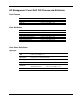
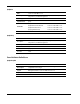
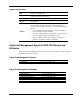
This guide provides the Directory Services schema for HP management products. This
schema works on all LDAP v3 compliant directories. The tables below contain class,
category and attribute definitions relating to remote management.
Audience Assumptions
This guide is for the person who installs, administers, and troubleshoots servers. HP assumes
you are qualified in the servicing of computer equipment and trained in recognizing hazards
in products with hazardous energy levels.
Schema Considerations
Naming Conventions and Registry
HP schema extensions follow the LDAP naming convention, which includes meaningful
names with initial lowercase and interior word initial capitialization. Names are constrained
to 30 characters to improve interoperability. All HP schema extensions associated with
directory-enabled management are prefixed with “hpq.” This prefix has been registered and
reserved for HP schema extensions with Microsoft and Novell, and follows the LDAP
convention of prefixing a short enterprise-specific moniker, such as a stock ticker symbol.
The LDAP Object IDentifiers (OIDs) used for directory-enabled management are assigned by
an HP internal authority and follow standard numbering conventions. The OIDs are assigned
from a subbranch of an ISO assigned OID tree belonging to HP, 1.3.6.1.4.1.232.
Replication
Attributes and classes used with HP directory-enabled management products do not have any
extra replication requirements. No indexes, filtered replicas, global catalog changes, or
schema replication settings are required for the products to function properly. Attributes and
objects within the directory service are only updated by administrative use of the
management snapins or other utilities. Replication of the HP directory-enabled attributes and
objects will be infrequent because the attributes and objects are not changed outside of the
use of the management snap-ins or utilities.
Schema Updates
HP schema extensions for directory-enabled management products include classes and
attributes that store information required to manage those products. Extensions are used in
favor of existing attributes so that the schema will be easier to use and understand. HP
understands that extending the schema requires caution and will offer customers new schema
extensions as infrequently as possible.
5