
Integrated Lights-Out technology: enhancing the manageability of ProLiant servers technology brief

16
Support for Dynamic Power Capping requires HP ProLiant hardware and the following system
firmware:
• System BIOS 2008.11.01 or later
• iLO 2 version 1.70 or later
• Firmware version 3.4 or greater for HP ProLiant G5 and c-Class blades servers
• Firmware version 2.32 or greater for HP ProLiant G6 servers in ML and DL form factors
• Onboard Administrator firmware version 2.32 or later for HP BladeSystem enclosures
For more information on Dynamic Power Capping, refer to the support matrix at
http://h18004.www1.hp.com/products/servers/management/dynamic-power-capping/support.html
Sensors and fan control
With the introduction of ProLiant G6 servers and iLO 2 firmware v 1.77, the sensor control functions
of the south bridge I/O chip were expanded and moved into the iLO 2 firmware. Based on feedback
from the applicable temperature sensor, the iLO 2 firmware uses a sophisticated algorithm to set and
control the speed for each fan zone in the server chassis. Fan speeds change as the thermal
conditions in the server chassis dictate. This allows fans to consume minimal power and maximize
energy efficiency.
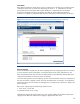
The iLO 2 v 1.77 firmware allows administrators to use multiple SMART sensors. ProLiant servers can
have up to 64 sensors located on DIMMs, hard drives, and elsewhere throughout the server. The
exact number of thermal sensors is dependent upon the server platform. Administrators can view the
status of the temperature sensors through the iLO web pages and HP Systems Insight Manager.
iLO uses a sophisticated PID (proportional–integral–derivative) control feedback algorithm that allows
much tighter control than previous multi-segment sensors. The PID algorithm takes into account the
following elements:
• Proportional control. The algorithm output varies based on how high the temperature is compared
to the target set-point (determined by thermal engineers during the HP design process).
• Integral control. The output varies based on the sum of the temperature changes over time. This is a
function of how long the system takes to get closer to the target temperature set-point.
• Derivative control. The output varies based on the rate of temperature change over time. A greater
rate of change in temperature results in increased fan speed.
Security
Because iLO enables remote server configuration and control, it is important to have strong security
surrounding the iLO device. For example, the management processor includes built-in firewall
functionality so that login credentials, passwords, and encryption keys stored in the embedded
memory are secured from the view of any host software. The firewall is a hardware mechanism
preventing any host software from accessing registers, data, and interfaces in iLO without passing the
request through iLO firmware. This means malicious programs running on a compromised host cannot
directly access the dedicated iLO network or data.
For detailed information about iLO security, refer to the “Integrated Lights-Out security” technology
brief available at
http://h20000.www2.hp.com/bc/docs/support/SupportManual/c00212796/c00212796.pdf