
Integrated Lights-Out technology: enhancing the manageability of ProLiant servers technology brief

13
Power Management Capabilities
Virtual power control
The iLO 2 processor allows administrators to power cycle a server remotely. Using a supported
browser interface, a system administrator can use iLO 2 to remotely operate the power button of a
host server as easily as pushing the physical power button. Virtual power support allows the user to
power on, power off, and power cycle the server.
Like other aspects of iLO, the virtual power feature is independent of the OS and will work regardless
of the state of the OS. However, iLO can take advantage of OS-supported power features. For
example, with operating systems that are ACPI-compliant, such as Windows Server 2008, the
momentary press of the virtual power button will initiate a graceful shutdown of the OS before turning
off the power. An administrator can observe the shutdown process through the remote console
window.
Some operating systems can establish power policies whereby the server can be shut down only
through the OS or by pressing the power button for an extended time. The virtual power feature of
iLO 2 allows the administrator to override such a host power policy and force a server shutdown if
needed.
Managing server power
The main server processor complex is one of the single greatest power consumers in ProLiant servers.
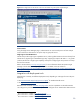
The iLO 2 processor can monitor CPU power states and can measure peak and average server power
use, allowing administrators to monitor power and thermal requirements in remote servers.
HP ProLiant G6 servers have enhanced iLO 2 firmware that monitors and manages thermal
parameters for a multitude of thermal sensors that monitor disk drives, fans, and DIMMs. This allows
fan settings to be optimized for actual conditions rather than over-cooling the server.
HP Power Regulator
HP Power Regulator is an OS-independent power management capability of HP ProLiant servers that
lets a system administrator control power use without significantly impacting server performance. In its
default configuration, Power Regulator dynamically adjusts power consumption to match the workload
of the server.
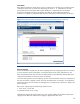
The Power Regulator firmware uses host processor performance registers to monitor processor
utilization. The iLO 2 device collects the processor utilization data for each logical processor in the
host server when the server is powered on and is not in POST. System administrators can configure
Power Regulator settings to dynamically switch the processor from one performance state, or P-state,
to another as processor utilization changes. Modifying the host processor P-state by reducing or
increasing processor voltage and frequency as needed can result in significant power savings with
minimal performance degradation.
For more information about Power Regulator, see the technology brief white paper, “
HP Power
Regulator for ProLiant Servers.
”
6
6
Available at http://h20000.www2.hp.com/bc/docs/support/SupportManual/c00300430/c00300430.pdf