
Intel Telco Alarms Manager 2.0, Revision 1.0 - HP Carrier-Grade Server cc3310 User's Guide




Intel Telco Alarms Manager 2.0
Configuration
8
Alarm Models
TAM supports two models, Most Severe and All Severities. If TAM is running in firmware-based mode, the
SDR (Sensor Data Record) can be configured to change the alarm model. Please refer to the BMC TAM EPS
for SDR information. If TAM is running in software-based mode, the alarm model can be configured by
modifying the tamconfig file and setting ALL_SEVERITIES_MODEL to yes or no. TAM must be restarted
in order for this change to take effect.
• Linux: /usr/local/tam/etc/tamconfig
• Windows: <TAMTargetDirectory>\tamconfig.dat
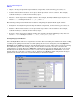
• TAMTools: OSD Tab > Options > Alarm Model
Most Severe Alarm Model—Only the most critical alarm LED is illuminated. For example, if a minor
alarm is present and a major alarm occurs, the minor alarm data will be retained in the alarm database;
only the major alarm LED will be illuminated. If the condition that set the minor alarm previously still
exists when the major alarm is cleared, the minor alarm will once again become illuminated. The Most
Severe model is the default alarm model.
All Severities Alarm Model—All alarm LEDs for which alarm data exist will illuminate. This behavior
facilitates the illumination of multiple LEDs simultaneously.
Alarm Severities
Severity modifications are dependent upon the Event Agent’s configuration. The Event Agents analyze
events from the hardware and software applications, and map the sensor severity to a Telco Alarm severity.
The Event Agents then make calls to the TAM with the alarm information for alarm table entry and LED
illumination. Table 1 lists descriptions for each alarm panel LED. In ISM, a noncritical map to a minor TAM
event, a critical maps to a major TAM event, and nonrecoverable maps to a critical TAM event.
Table 1. Severity Mapping
TAM Alarm Panel LEDs Description
MINOR (MNR)
A non-service-affecting condition. Corrective action should be taken in order
to prevent a more serious fault.
MAJOR (MJR) A service-affecting condition that requires an urgent action.
CRITICAL (CRT) A service-affecting condition that requires an immediate action.
POWER (PWR) Only active for power or voltage events.
DISK (DSK) Activated during disk activity.
(NIC) Activated during network activity.
(ON)
Activated when system is powered on. Not activated when system is powered
off.