
HP 9000 rp8420 Server - User Service Guide, Fifth Edition

Front Panel
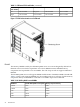
Front Panel Indicators and Controls
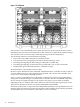
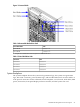
The front panel, located on the front of the server, includes a power switch. See Figure 1-3 “Front
Panel LEDs and Power Switch”.
Enclosure Status LEDs
The following status LEDs are on the front panel:
• Standby power status LED (green)
• Management processor (MP) status LED (green)
• Enclosure status run (green), fault (red), attention (yellow), and power (green) LEDs
• Remote port status LED (green)
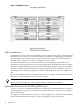
Figure 1-3 Front Panel LEDs and Power Switch
Cell Board
The cell board contains the processors, main memory, and the CC application-specific integrated
circuit (ASIC) that interfaces the processors and memory to the I/O. The CC provides a crossbar
connection that allows communication with other cell boards in the system. It connects to the
processor-dependent hardware (PDH) and micro controller hardware. Each cell board holds up
to 16 DIMMS. There can be one to four cell boards installed in an HP 9000 rp8420 server. A cell
board can be selectively powered down for cell replacement without affecting cells in other
configured partitions.
System Backplane
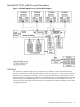
The server backplane board contains a pair of crossbar chips (XBC), the clock generation logic,
the reset generation logic, some power regulators, and two local bus adapter (LBA) chips that
create internal PCI buses for communicating with the core I/O cards. The backplane also contains
connectors for attaching the cell boards, PCI-X backplane, MP core I/O cards, SCSI cables, bulk
power, chassis fans, front panel display, intrusion switches, external system bus adaptor (SBA)
link connectors, and the system scan card.
I/O Subsystem
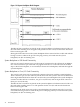
All of the I/O is integrated into the system by way of the PCI busses. The CC on each cell board
communicates with one SBA over the SBA link. The SBA link consists of both an inbound and
an outbound link with an effective bandwidth of approximately 1GB/s. The SBA converts the
SBA link protocol into “ropes.” A rope is defined as a high-speed, point-to-point data bus. The
SBA can support up to 16 of these high-speed bi-directional links for a total aggregate bandwidth
of approximately 4GB/s. The server supports a maximum of two SBAs with the capability of
supporting an additional two SBAs in an externally connected I/O cabinet known as the HP
Server Expansion Unit.
There are LBA chips on the PCI-X backplane that act as a bus bridge, supporting either one or
two ropes and capable of driving 33 MHz or 66 MHz for PCI cards. The LBAs can also drive at
66 MHz or 133 MHz for PCI-X cards.
22 Introduction