
Switch 7700 Configuration Guide, v2

88 CHAPTER 5: ROUTING PROTOCOL OPERATION
transmitted separately. Therefore, the sizes of the LSDBs in other areas can be
reduced.
Once the aggregate segment of a certain network is added to the area, all the
internal routes of the IP addresses in the range of the aggregate segment are no
longer separately broadcast to other areas. Only the route summary of the whole
aggregate network is advertised. But if the range of the segment is restricted by
the not-advertise keyword, the route summary of this segment is not advertised.
This segment is represented by an IP address and mask. The receiving and
restriction of the aggregate segment can reduce the routing traffic exchanged
between the areas.
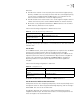
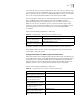
Route summarization can take effect only when it is configured on ABRs.
Perform the following configuration in OSPF Area view.
By default, the inter-area routes are not summarized.
Configure OSPF Virtual Link
According to RFC2328, after the area division of OSPF, The backbone are is
established with an area-id of 0.0.0.0. The OSPF routes between non-backbone
areas are updated with the help of the backbone area. OSPF stipulates that all the
non-backbone areas should maintain connectivity with the backbone area and at
least one interface on the ABR should fall into the area 0.0.0.0. If an area does not
have a direct physical link with the backbone area 0.0.0.0, a virtual link must be
created.
If physical connectivity cannot be made due to network topology restrictions, a
virtual link can be used to meet the requirements of RFC 2328. The virtual link
refers to a logic channel set up through the area of a non-backbone internal route
between two ABRs. The two ends of the channel should be ABRs and the
connection can take effect only when both ends are configured. The virtual link is
identified by the ID of the remote router. The area, which provides the ends of the
virtual link with a non-backbone area internal route, is called the transit area. The
ID of the transit area should be specified during configuration.
The virtual link is activated after the route passing through the transit area is
calculated, which is equivalent to a P2P connection between two ends. Therefore,
similar to the physical interfaces, you can also configure various interface
parameters on this link, such as a hello timer.
The “logic channel” means that the multiple routers running OSPF between two
ABRs only take the role of packet forwarding (the destination addresses of the
protocol packets are not these routers, so these packets are transparent to them
and the routers forward them as common IP packets). The routing information is
directly transmitted between the two ABRs. The routing information refers to the
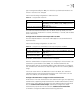
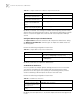
Tab le 37 Configure the Route Summarization of an OSPF Area
Operation Command
Configure the Route
Summarization of OSPF Area
abr-summary ip-address mask [ advertise |
not-advertise ]
Cancel route summarization of
OSPF Area
undo abr-summary ip-address mask