
Switch 7700 Configuration Guide, v2

76 CHAPTER 5: ROUTING PROTOCOL OPERATION
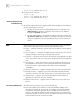
[Switch B-rip] network 110.11.2.0
3 Configure RIP on Switch C:
[Switch C] rip
[Switch C-rip] network 117.102.0.0
[Switch C-rip] network 110.11.2.0
RIP Fault Diagnosis and
Troubleshooting
1 The Switch 7700 cannot receive update packets when the physical connection to
the peer routing device is normal.
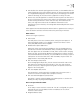
■ RIP does not operate on the corresponding interface (for example, if the
undo rip work command is executed) or this interface is not enabled
through the network command.
■ The peer routing device is configured for multicast mode (for example, the
rip version 2 multicast command is executed) but the multicast mode has
not been configured on the corresponding interface of the local Ethernet
switch.
OSPF Open Shortest Path First (OSPF) is an Interior Gateway Protocol (IGP). At present,
OSPF version 2 (RFC2328) is used, which has the following features:
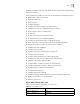
■ Scope — Supports networks in various sizes and can support several hundred
routers
■ Fast convergence — Transmits the update packets instantly after the network
topology changes so the change is synchronized in the AS
■ Loop-free — Calculates routes with the shortest path tree algorithm according
to the collected link states so no loop routes are generated from the algorithm
itself
■ Area partition — Allows the network of AS to be divided into different areas
for management convenience so the routing information that is transmitted
between the areas is further abstracted to reduce network bandwidth
consumption
■ Equal-cost multi-route — Supports multiple equal-cost routes to a destination
■ Routing hierarchy — Supports a four-level routing hierarchy that prioritizes
routes into intra-area, inter-area, external type-1, and external type-2 routes.
■ Authentication — Supports the interface-based packet authentication to
guarantee the security of the route calculation
■ Multicast transmission — Supports multicast addresses to receive and send
packets.
Calculating OSPF Routes The OSPF protocol calculates routes in the following way:
■ Each OSPF-capable router maintains a Link State Database (LSDB), which
describes the topology of the entire AS. According to the network topology
around itself, each router generates a Link State Advertisement (LSA). The
routers on the network transmit the LSAs among themselves by transmitting
the protocol packets to each other. Thus, each router receives the LSAs of other
routers and all these LSAs constitute its LSDB.