
Switch 7700 Configuration Guide, v2

194 CHAPTER 7: QOS/ACL OPERATION
Define the work time range:
1 Set the time range from 8:00 to 18:00.
[SW7700] time-range 3com 8:00 to 18:00
Define the ACL to access the payment server:
1 Enter the name of the advanced ACL.
[SW7700] acl name traffic-of-payserver advanced match-order config
2 Set the rules for other department to access the payment server.
[SW7700-acl-adv-traffic-of-payserver] rule 1 deny ip source any
destination 129.110.1.2 0.0.0.0 time-range 3com
3 Set the rules for the Office of President to access the payment server.
[SW7700-acl-adv-traffic-of-payserver] rule 2 permit ip source
129.111.1.2 0.0.0.0 destination 129.110.1.2 0.0.0.0
Activate ACL:
1 Activate the traffic-of-payserver ACL .
[SW7700-Ethernet1/0/1] packet-filter inbound ip-group
traffic-of-payserver
QoS Overview In a traditional IP network, all packets are treated equally without priority
difference. Every switch or router handles the packets following the first in, first
out (FIFO) policy. Switches and routers make their best effort to transmit the
packets to the destination, not making any commitment or guarantee of the
transmission reliability, delay, or to satisfy other performance requirements.
Ethernet technology is currently the most widely used network technology.
Ethernet has been the dominant technology of various independent Local Area
Networks (LANs), and many Ethernet LANs have been part of the Internet.
Moreover, along with the continuous development of the Ethernet technology,
Ethernet has become one of the major ways to access Internet users. To
implement the end-to-end QoS solution on the whole network, one must consider
the question of how to guarantee Ethernet QoS service. This requires the Ethernet
switching devices to apply Ethernet QoS technology and deliver the QoS
guarantee at different levels to different types of signal transmissions over the
networks, especially those having requirements of shorter time delay and lower
jitter.
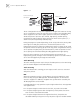
Traffic Traffic refers to all packets passing through a switch.
Traffic Classification
Traffic classification means identifying the packets with certain characteristics,
using a matching rule called the classification rule that is set by the configuration
administrator, based on the actual requirements. The rule can be very simple. For
example, traffic with different priorities can be identified according to the ToS field
in the IP packet header.
There are also some complex rules. For example, the information over the
integrated link layer (Layer-2), network layer (Layer-3) and transport layer (Layer-4),