
Switch 7700 Configuration Guide, v2

100 CHAPTER 5: ROUTING PROTOCOL OPERATION
Two-level Structure of
IS-IS Routing Protoco
l
IS-IS adopts the two-level structure including Level-1 and Level-2 in a routing
domain (or the AS) to support the routing network at a large scale. A large RD is
divided into one or more areas. The Level-1 router manages the intra-area routing
and is responsible for communicating with other Level-1 routers in the same area.
The Level-2 router manages the inter-area routing.
All the Level-2 routers compose the backbone network of the RD, which is
responsible for the inter-area communications. Every area has at least one router
located on both the Level-1 and Level-2 (called Level-1/Level-2 router), which
connects the area to the backbone network. A Level-1/Level-2 router contiguous
with a router in some other area will notify the Level-1 routers in the local area
that it has the exit of the area.
For the NPDU from an area destined to somewhere in another area, Level-1 router
will first transmit it to the nearest Level-1/Level-2 router in the local area,
regardless of its actual destination area. And then the NPDU will be transmitted
over the Level-2 backbone network to a Level-1 router in the destination area.
Finally the Level-1 router transmits the NPDU to the destination.
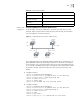
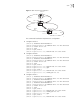
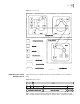
Figure 9 illustrates a network running the IS-IS routing protocol and composed of
two RDs, Routing Domain 1 and Routing Domain 2. Routing Domain 1 includes
two areas, Area 1 and Area 2, and Routing Domain 2 only has Area 3. In Routing
Domain 1, the three ISs connected by bold lines compose the area backbone. They
are all Level-1/Level-2 routers. The other 4 ISs not connected by bold line are
Level-1 routers.