
Basic Operation Guide 2013/06
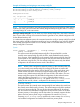

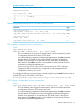

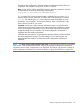
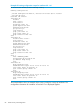

Table Of Contents
- Switch Software
- Contents
- 1 Commands found in the Basic Operation Guide
- 2 Getting started
- 3 Using the Menu Interface
- 4 Using the Command Line Interface (CLI)
- Overview
- Accessing the CLI
- Using the CLI
- Return message types with CLI commands
- CLI interactive commands
- CLI control and editing
- 5 Using the HP WebAgent
- 6 Switch memory and configuration
- Overview
- Configuration file management
- Using the CLI to implement configuration changes
- Creating a custom default configuration
- Using the menu and WebAgent to implement configuration changes configuration file
- Zeroization
- Using Primary and Secondary flash image options
- Multiple configuration files
- Display configuration of selected interface
- Automatic configuration update with DHCP Option 66
- 7 Interface access and system information
- 8 Configuring IP addressing
- Overview
- IP configuration
- Loopback interfaces
- IP Preserve: retaining VLAN-1 IP addressing across configuration file downloads
- Configuring a single source IP address
- 9 Software management
- Downloading switch documentation and software from the web
- Viewing or downloading the software manual set
- Downloading software updates for your switch
- Software signing and verification
- Saving configurations while using the CLI
- Important: Best Practices for software updates
- Updating the switch: overview
- Updating the switch: detailed steps
- Rolling back switch software
- Viewing or transferring alternate configuration files
- Downloading switch documentation and software from the web
- Index

The example below illustrates using erase config <filename> to remove a startup-config
file.
Example 63 Erasing a non-active startup-config file
HP Switch(config)# show config files
Configuration files:
id | act pri sec | name
---+-------------+-----------------------------------------------
1 | * * | minconfig
2 | * | config2
3 | | config3
HP Switch(config)# erase config config3
HP Switch(config)# show config files
Configuration files:
id | act pri sec | name
---+-------------+-----------------------------------------------
1 | * * | minconfig
2 | * | config2
3 | |
With the same memory configuration as is shown in the bottom portion of the above example,
executing erase startup-config boots the switch from primary flash, resulting in a new file
named minconfig in the same memory slot. The new file contains the default configuration for the
software version currently in primary flash.
Using the Clear + Reset button combination to reset the switch to its default configuration
The Clear + Reset button combination described in the Installation and Getting Started Guide
produces these results. That is, when you press the Clear + Reset button combination, the switch:
• Overwrites the content of the startup-config file currently in memory slot 1 with the default
configuration for the software version in primary flash, and renames this file to config1.
• Erases any other startup-config files currently in memory.
• Configures the new file in memory slot 1 as the default for both primary and secondary flash
locations (regardless of the software version currently in secondary flash).
• Boots the switch from primary flash using the new startup-config file.
82 Switch memory and configuration