
Basic Operation Guide 2013/06

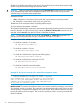
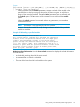
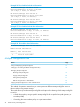

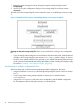
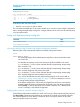
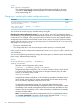
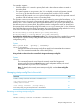
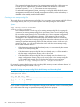
Table Of Contents
- Switch Software
- Contents
- 1 Commands found in the Basic Operation Guide
- 2 Getting started
- 3 Using the Menu Interface
- 4 Using the Command Line Interface (CLI)
- Overview
- Accessing the CLI
- Using the CLI
- Return message types with CLI commands
- CLI interactive commands
- CLI control and editing
- 5 Using the HP WebAgent
- 6 Switch memory and configuration
- Overview
- Configuration file management
- Using the CLI to implement configuration changes
- Creating a custom default configuration
- Using the menu and WebAgent to implement configuration changes configuration file
- Zeroization
- Using Primary and Secondary flash image options
- Multiple configuration files
- Display configuration of selected interface
- Automatic configuration update with DHCP Option 66
- 7 Interface access and system information
- 8 Configuring IP addressing
- Overview
- IP configuration
- Loopback interfaces
- IP Preserve: retaining VLAN-1 IP addressing across configuration file downloads
- Configuring a single source IP address
- 9 Software management
- Downloading switch documentation and software from the web
- Viewing or downloading the software manual set
- Downloading software updates for your switch
- Software signing and verification
- Saving configurations while using the CLI
- Important: Best Practices for software updates
- Updating the switch: overview
- Updating the switch: detailed steps
- Rolling back switch software
- Viewing or transferring alternate configuration files
- Downloading switch documentation and software from the web
- Index

Syntax:
show config <filename>
This command displays the content of the specified startupconfig file in the same
way that the show config command displays the content of the default (currently
active) startupconfig file.
Changing or overriding the reboot configuration policy
PageCommand
Belowstartup-default [ primary | secondary ]
config <filename>
79boot system flash <primary | secondary>
config <filename>
You can boot the switch using any available startup-config file.
Changing the reboot configuration policy. For a given reboot, the switch automatically reboots
from the startup-config file assigned to the flash location (primary or secondary) being used for the
current reboot. For example, when you first download a software version that supports multiple
configuration files and boot from the flash location of this version, the switch copies the existing
startup-config file (named oldConfig) into memory slot 2, renames this file to workingConfig,
and assigns workingConfig as:
• The active configuration file
• The configuration file to use when booting from either primary or secondary flash.
In this case, the switch is configured to automatically use the workingConfig file in memory slot
2 for all reboots.
You can use the following command to change the current policy so that the switch automatically
boots using a different startup-config file.
Syntax:
startup-default [ primary | secondary ]
config <filename>
Specifies a boot configuration policy option:
[ primary | secondary ]config <filename>
Designates the startup-config file to use in a reboot with the software version stored
in a specific flash location. Use this option to change the reboot policy for either
primary or secondary flash, or both.
config <filename>
Designates the startup-config file to use for all reboots, regardless of the flash version
used. Use this option when you want to automatically use the same startup-config
file for all reboots, regardless of the flash source used.
For redundant management systems, this command affects both the active
management module and the standby management module. The config file is copied
immediately to the standby management module and becomes the default on that
module when the next bootup occurs, unless redundancy is disabled or the standby
module has failed selftest.
Note: To override the current reboot configuration policy for a single reboot instance,
use the boot system flash command with the options described under “Changing
or overriding the reboot configuration policy” (page 78).
78 Switch memory and configuration