
Basic Operation Guide 2013/06


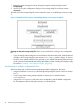
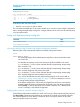
Table Of Contents
- Switch Software
- Contents
- 1 Commands found in the Basic Operation Guide
- 2 Getting started
- 3 Using the Menu Interface
- 4 Using the Command Line Interface (CLI)
- Overview
- Accessing the CLI
- Using the CLI
- Return message types with CLI commands
- CLI interactive commands
- CLI control and editing
- 5 Using the HP WebAgent
- 6 Switch memory and configuration
- Overview
- Configuration file management
- Using the CLI to implement configuration changes
- Creating a custom default configuration
- Using the menu and WebAgent to implement configuration changes configuration file
- Zeroization
- Using Primary and Secondary flash image options
- Multiple configuration files
- Display configuration of selected interface
- Automatic configuration update with DHCP Option 66
- 7 Interface access and system information
- 8 Configuring IP addressing
- Overview
- IP configuration
- Loopback interfaces
- IP Preserve: retaining VLAN-1 IP addressing across configuration file downloads
- Configuring a single source IP address
- 9 Software management
- Downloading switch documentation and software from the web
- Viewing or downloading the software manual set
- Downloading software updates for your switch
- Software signing and verification
- Saving configurations while using the CLI
- Important: Best Practices for software updates
- Updating the switch: overview
- Updating the switch: detailed steps
- Rolling back switch software
- Viewing or transferring alternate configuration files
- Downloading switch documentation and software from the web
- Index

1. Reboot the switch through the Primary boot path using the startup-config file named
backupconfig.
2. Use the CLI to make configuration changes in the running-config file, and then execute
write-mem.
The result is that the startup-config file used to reboot the switch is modified by the actions in step
2.
Figure 19 Example of reboot process and making changes to the startup-config file
Creating an alternate startup-config file. There are two methods for creating a new configuration
file:
• Copy an existing startup-config file to a new filename, then reboot the switch, make the desired
changes to the running-config file, then execute write memory. (Refer to Figure 19, above.)
• Erase the active startup-config file. This generates a new, default startupconfig file that always
results when the switch automatically reboots after deletion of the currently active startup-config
file. (Refer to “Creating a new startup-config file” (page 80).)
Transitioning to multiple configuration files
At the first reboot with a software release supporting multiple configuration, the switch:
• Assigns the filename oldConfig to the existing startup-config file (which is stored in memory
slot 1).
• Saves a copy of the existing startup-config file in memory slot 2 with the filename
workingConfig.
• Assigns the workingConfig file as the active configuration and the default configuration
for all subsequent reboots using either primary or secondary flash.
76 Switch memory and configuration