
Basic Operation Guide 2013/06
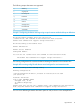



Table Of Contents
- Switch Software
- Contents
- 1 Commands found in the Basic Operation Guide
- 2 Getting started
- 3 Using the Menu Interface
- 4 Using the Command Line Interface (CLI)
- Overview
- Accessing the CLI
- Using the CLI
- Return message types with CLI commands
- CLI interactive commands
- CLI control and editing
- 5 Using the HP WebAgent
- 6 Switch memory and configuration
- Overview
- Configuration file management
- Using the CLI to implement configuration changes
- Creating a custom default configuration
- Using the menu and WebAgent to implement configuration changes configuration file
- Zeroization
- Using Primary and Secondary flash image options
- Multiple configuration files
- Display configuration of selected interface
- Automatic configuration update with DHCP Option 66
- 7 Interface access and system information
- 8 Configuring IP addressing
- Overview
- IP configuration
- Loopback interfaces
- IP Preserve: retaining VLAN-1 IP addressing across configuration file downloads
- Configuring a single source IP address
- 9 Software management
- Downloading switch documentation and software from the web
- Viewing or downloading the software manual set
- Downloading software updates for your switch
- Software signing and verification
- Saving configurations while using the CLI
- Important: Best Practices for software updates
- Updating the switch: overview
- Updating the switch: detailed steps
- Rolling back switch software
- Viewing or transferring alternate configuration files
- Downloading switch documentation and software from the web
- Index

Menu interaction with other interfaces.
• The menu interface displays the current running-config parameter settings. You can use the
menu interface to save configuration changes made in the CLI only if the CLI changes are in
the running config when you save changes made in the menu interface. (For more on how
switch memory manages configuration changes, see Chapter 6, “Switch Memory and
Configuration”.)
• A configuration change made through any switch interface overwrites earlier changes made
through any other interface.
• The Menu Interface and the CLI (Command Line Interface) both use the switch console. To
enter the menu from the CLI, use the menu command. To enter the CLI from the Menu interface,
select Command Line (CLI) option.)
Starting and ending a menu session
You can access the menu interface using any of the following:
• A direct serial connection to the switch’s console port, as described in the installation guide
you received with the switch
• A Telnet connection to the switch console from a networked PC or the switch’s web browser
interface. Telnet requires that an IP address and subnet mask compatible with your network
have already been configured on the switch.
NOTE: This section assumes that either a terminal device is already configured and connected
to the switch (see the Installation and Getting Started Guide shipped with your switch) or that you
have already configured an IP address on the switch (required for Telnet access).
How to start a menu interface session
In its factory default configuration, the switch console starts with the CLI prompt. To use the menu
interface with Manager privileges, go to the Manager level prompt and enter the menu command.
1. Use one of these methods to connect to the switch:
• A PC terminal emulator or terminal
• Telnet
2. Do one of the following:
• If you are using Telnet, go to step 3.
• If you are using a PC terminal emulator or a terminal, press [Enter] one or more times
until a prompt appears.
3. When the switch screen appears, do one of the following:
• If a password has been configured, the password prompt appears.
Password: _
Type the Manager password and press [Enter]. Entering the Manager password gives
you manager-level access to the switch. (Entering the Operator password gives you
operator-level access to the switch. Refer to the Access Security Guide for your switch.)
• If no password has been configured, the CLI prompt appears. Go to the next step.
4. When the CLI prompt appears, display the Menu interface by entering the menu command.
For example:
HP Switch# menu [Enter]
results in the following display:
18 Using the Menu Interface