
Basic Operation Guide 2013/06
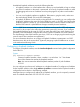
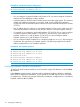
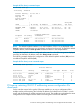
Table Of Contents
- Switch Software
- Contents
- 1 Commands found in the Basic Operation Guide
- 2 Getting started
- 3 Using the Menu Interface
- 4 Using the Command Line Interface (CLI)
- Overview
- Accessing the CLI
- Using the CLI
- Return message types with CLI commands
- CLI interactive commands
- CLI control and editing
- 5 Using the HP WebAgent
- 6 Switch memory and configuration
- Overview
- Configuration file management
- Using the CLI to implement configuration changes
- Creating a custom default configuration
- Using the menu and WebAgent to implement configuration changes configuration file
- Zeroization
- Using Primary and Secondary flash image options
- Multiple configuration files
- Display configuration of selected interface
- Automatic configuration update with DHCP Option 66
- 7 Interface access and system information
- 8 Configuring IP addressing
- Overview
- IP configuration
- Loopback interfaces
- IP Preserve: retaining VLAN-1 IP addressing across configuration file downloads
- Configuring a single source IP address
- 9 Software management
- Downloading switch documentation and software from the web
- Viewing or downloading the software manual set
- Downloading software updates for your switch
- Software signing and verification
- Saving configurations while using the CLI
- Important: Best Practices for software updates
- Updating the switch: overview
- Updating the switch: detailed steps
- Rolling back switch software
- Viewing or transferring alternate configuration files
- Downloading switch documentation and software from the web
- Index
Example 83 A loopback interface configuration
HP Switch(config)# interface loopback 1
HP Switch(config)# ip address 10.1.1.1
NOTE:
• You can configure a loopback interface only from the CLI; you cannot configure a loopback
interface from the WebAgent or Menu interface.
• Loopback interfaces share the same IP address space with VLAN configurations. The maximum
number of IP addresses supported on a switch is 2048, which includes all IP addresses
configured for both VLANs and loopback interfaces (except for the default loopback IP address
127.0.0.1).
• Each IP address that you configure on a loopback interface must be unique in the switch. This
means that the address cannot be used by a VLAN interface or another loopback interface.
• For example, if you configure a VLAN with IP address 172.16.100.8/24, you cannot configure
a loopback interface with IP address 172.16.100.8. In the same way, if you configure a
loopback interface (lo1) with IP address 172.16.101.8, you cannot configure another
loopback interface (lo2) with IP address 172.16.101.8.
• You can configure multiple IP addresses on a loopback interface (lo0 to lo7). Up to thirty-two
IP addresses are supported on a loopback interface. The following example shows valid IP
address configurations on two loopback interfaces.
Example 84 Two loopback interfaces
HP Switch(config)# interface loopback 0
HP Switch(lo0)# ip address 172.16.101.8
HP Switch(lo0)# ip address 172.16.101.9
HP Switch(lo0)# exit
HP Switch(config)# interface loopback 1
HP Switch(lol)# ip address 172.16.102.1
HP Switch(lol)# ip address 172.16.102.2
Displaying loopback interface configurations
To display the list of loopback interfaces which have been assigned IP addresses, enter the show
ip command.
In the show ip command output, information about configured loopback interfaces is displayed
below other IP configuration parameters, such as packet TTL and ARP age-out values, and VLAN
IP configurations. The following example displays the IP addresses configured for two user-defined
loopback interfaces (lo1) and (lo2).
116 Configuring IP addressing