
DDR3 memory technology




5
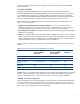
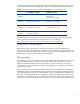
Table 2: Comparing DDR3 memory speeds
JEDEC Name Common Name Data Transfer Rate Maximum DIMM Throughput
PC3 – 14900 DDR3-1866 1866 MT/s 14.9 GB/s
PC3 – 12800 DDR3-1600 1600 MT/s 12.8GB/s
PC3 – 10600 DDR3-1333 1333 MT/s 10.6 GB/s
PC3 – 8500 DDR3-1066 1066 MT/s 8.5 GB/s
PC3 – 6400 DDR3- 800 800 MT/s 6.4 GB/s
JDEC has extended the DDR3 specification to define additional memory speeds of 1866 MT/s and
2166 MT/s. ProLiant Gen8 servers will initially support memory speeds up to 1600 MT/s. We have
designed the ProLiant Gen8 platform architecture to run at memory speeds up to 1866 MT/s once
processor chipsets supporting it are available.
The faster data rates for DDR3 result in maximum possible throughput rates that are significantly
greater than those of DDR2 are. The maximum bandwidth represents the amount of data that can
move between a memory controller and the DIMMs if data transfers occur on every transfer cycle.
With DDR3-1600 memory, the maximum bandwidth per memory channel is 12.8 GB/s.
Memory power consumption
DDR3 is more power efficient than DDR2. DDR3 DIMMs operate at 1.5V compared to 1.8V for DDR2
memory. DDR3 also has for low–voltage DIMMs that operate at 1.35V, further lowering power
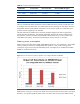
consumption. Figure 2 shows the idle and loaded power consumption for an 8 GB dual-rank DDR3
RDIMM in a ProLiant Gen8 server.
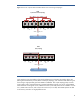
Figure 2: Power consumption by memory speed for a low-voltage 8 GB dual-rank RDIMM.
DDR3 memory running at 1333 MT/s uses about 25% more power than the same memory running at
800 MT/s. As a general guideline, DDR3 memory uses about 30% less power than DDR2 memory