
DDR3 memory technology


4
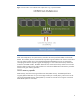
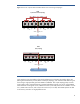
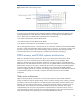
Figure 1: The illustration shows LRDIMM rank multiplication using a quad-rank DIMM.
With rank multiplication, the system memory controller sees each quad-rank DIMM as a dual-rank
DIMM. The controller uses the normal external chip select signal to address one of the six ranks that it
sees. The memory buffer chip on the selected Load Reduced DIMM then acts as an intermediary,
intercepting the external chip select signal and mapping it to one of four back-end chip select lines
located on the DIMM module. The buffer determines the correct back-end chip select line to activate
based on both the external chip select and the row and column addresses that the memory controller
asserts for the given memory operation.
DDR3 memory speeds
DDR3 memory uses faster clocking and data rates than DDR2 memory. The DDR3 specification
originally defined data rates of up to 1600 mega transfers per second (MT/s), more than twice the
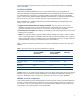
rate of the fastest DDR2 memory speed (Table 2). G6 and G7 ProLiant servers support a maximum
DDR3 DIMM speed of 1333 MT/s.