
DDR3 memory technology


3
architectures beginning with HP ProLiant G6 and G7 servers eliminated the need for an FBDIMM
solution with DDR3.
Load Reduced DIMMs
Load Reduced DIMMMs (LRDIMMs) are a new type of DDR3 memory to go alongside of the
Unbuffered (UDIMM) and Registered (RDIMM) DDR3 memory. LRDIMMs buffer the memory address
bus and the data bus to the memory controller by adding a full memory buffer chip to the DIMM
module. Unlike the Fully Buffered DIMMs (FBDIMMs) from DDR2 days, Load Reduced DIMMs deliver
data to the memory controller in parallel rather than using a high-speed serial connection.
Because LRDIMMs are completely buffered, they have both advantages and disadvantages when
used in a server. They include:
• Support for the maximum amount of memory per channel. You can install as many as three
LRDIMMs on a single memory channel. More important, with LRDIMMs you can now install three
quad-ranked DIMMs on the same channel. You can only install two quad-rank RDIMMs.
• Increased power consumption. The addition of the buffering chip and the higher data rates increase
DIMM power consumption.
• Latency. For equivalent memory speeds, buffering requires adding clock cycles to memory reads or
writes, increasing the latency of LRDIMMs relative to single and dual-rank RDIMMs. This condition is
offset by the fact that on fully populated memory channels LRDIMMs operate at a higher speed than
quad-rank RDIMMs, resulting in a comparatively lower overall latency.
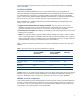
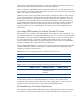
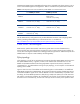
Table 1 compares the operating characteristics of a quad rank LRDIMM with those of an equivalent
RDIMM.
Table 1: Operating characteristics of Quad-rank LRDIMM versus RDIMM
32 GB Low Voltage
Quad-rank RDIMM
(ProLiant G7 )
32 GB Low Voltage
Quad-rank LRDIMM
(ProLiant Gen8)
LRDIMM
Advantage
Max. DIMMs per channel 2 3 50%
Max. Capacity per channel 64 GB 96 GB 50%
Max. Bandwidth per
Channel
6.4 GB/s (@ 800 MT/s) 8.5 (@ 1066 MT/s) 33%
Idle Latency 80 ns 74 ns 7%
Max. Power 6 W 9W -50%
LRDIMMs allow you to configure large capacity systems with faster memory data rates than quad-rank
RDIMMs. ProLiant Gen8 servers support LRDIMMs as well as UDIMMs and RDIMMs, although you
cannot mix DIMM types within a single server. G6 and G7 servers do not support LRDIMMs.
LRDIMMs and rank multiplication
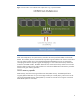
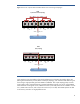
Load reduced DIMMs are the first DDR3 DIMMs to support operation of three quad-ranked DIMMs on
a memory channel. DDR3 memory architecture can only natively support a maximum of eight ranks
per channel, not the 12 ranks required for three quad-rank DIMMs. LRDIMM architecture solves this
issue using by using a design known as rank multiplication.