
DDR3 memory technology

12
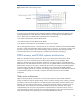
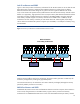
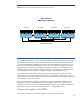
Figure 6: Typical G6, G7 ProLiant 2P NUMA Architecture
NUMA architecture solves the two related problems that emerged as system complexity grew:
• It eliminates bottlenecks in the memory subsystem that constrain system memory throughput
• It supports larger memory footprints without significantly lowering memory performance
DDR3 integrates with NUMA architecture to deliver significantly improved memory throughput. With
a maximum transfer rate of 1600 MT/s, DDR3 memory can potentially deliver 12.8 GB/s of
bandwidth per channel. ProLiant Gen8 NUMA architecture also supports more memory controllers
and channels. For example, using DDR3 memory with six (eight for Gen 8) channels, the architecture
for the Intel-based 2P ProLiant G6 servers has a maximum theoretical memory bandwidth of 64 GB/s,
65% greater than that of the older architecture using DDR2 memory.
DDR3 memory and 2P ProLiant servers
For 2P ProLiant servers, the memory architecture is relatively the same for both Intel-based and AMD-
based designs (Figure 6). For G6 and G7 servers, each of the two processors has three memory
channels supporting up to three DIMMs each.
For ProLiant Gen8 servers, the number of memory channels in 2P systems increases to four per
processor. Memory speeds increase to support up to 1600 MT/s initially and 1866 MT/s later. Using
quad-rank LRDIMM, the maximum memory capacity for the Gen8 2P systems will increase to 768 GB.
This applies to both Intel-based and AMD-based server designs.
DDR3 and 4P ProLiant architecture
For ProLiant 4P server architectures, Intel-based designs take a slightly different approach to the
memory subsystem than AMD-based systems. Each design approach has its own set of benefits, and
both rely on DDR3 memory.