
An Overview of Analog Dialup Modem Performance, Environments, and Impairments.

REVISED 7/20/98 11
DOC. NUM. PRT/005A/0798
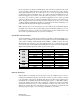
Connect Speed Explained
One final note on 56K technology is that at the current time, FCC limitations on transmit power
prevent the modems from being able to actually connect at 56K. FCC Part 68 regulation limit the
transmit power to the network to –10dBm; in order for current PCM technologies to reach 56Kbps,
the required transmit power is approximately –8dBm. Another potential limitation is whether or not
the provider end is connected with a T1 connection or ISDN PRI – a T1 connection normally re-
quires bit-robbing to be used for signaling, whereas an ISDN PRI connection uses a separate chan-
nel for signaling and does not employ RBS. The presence of RBS can degrade the connect speed of
a PCM connection.
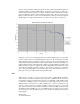
As is the case with the other modems technologies, 56K modems will adjust their connect speed to
fully utilize whatever line conditions are presented – meaning that the user will not always see a
56K connect. Connect speeds between 40K and 48K bps are fairly common, and higher rates will
be dependent on line conditions.
Compaq Modem Testing
With all of the above in mind, it quickly becomes obvious how important it is to perform rigorous
testing of any modem product to ensure peak performance regardless of where or how it’s used. At
Compaq, the modems are tested thoroughly and are held to the highest performance standards.
Each modem is subjected to a battery of tests that are intended to fully exercise each functional area
of the modem. The following list is a brief overview of the testing each modem must pass – the full
detail of which would comprise a fairly large document by itself and is only summarized here. It is
also important to note that new tests are regularly being added to keep pace with advancements in
modem functionality and performance.
Performance testing
n Throughput vs. Network Model
This is the network model testing described earlier in this document. This testing is performed
according to the procedures specified in TIA TSB-38. This testing is quite exhaustive, and a
modem may undergo hundreds of hours of testing from the early design phase to final production.
n SNR testing
This testing is used primarily in the design phase of the modem to ensure that the performance of the
analog front-end is fully optimized. All applicable connect speeds and modulation protocols are
tested.
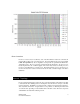
n Fall-forward/Fall-back
This test ensures that the modem properly adjusts its connect speed to match the line environment,
and that it does so at the correct time. During this test, the line conditions are varied from very clean
to very poor, and back again, and the throughput is measured at each step.
n Connect Reliability
This test measures the ability of the modem to reliably and consistently connect and pass data over a
variety of line conditions. This test is performed over the 7 EIA loops and over a null loop.