
An Overview of Analog Dialup Modem Performance, Environments, and Impairments.

REVISED 7/20/98 10
DOC. NUM. PRT/005A/0798
PCM (56k) Dependencies and Performance
Due to improvements in the PSTN network, and the increasing number of service providers that are
digitally connected to the network, it became possible to develop a technology that would extend the
possible data rates of a modem call beyond 33.6K bps. The technology for doing so is referred to as
PCM (pulse-coded modulation), and is fundamentally different from the technology used to achieve
data rates up to 33.6K bps.
Current PCM technology allows data rates up to 56Kbps in the receive direction, and up to
33.6Kbps in the transmit direction. Since the host-end modem must be digitally connected to the
network, it is not possible for PCM to operate between two end-user installations.
Network Topology for 56K
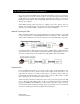
When considering the PSTN topology and its implications for modem performance, it’s important
to discuss the special case over which PCM (56K) modems are designed to operate. With normal
analog modem communications, the network is assumed to consist of primarily analog components.
With PCM modem technology, the PSTN network is treated as a completely digital network with
one analog impairment – that being the end user local loop. PCM technology became practical as
more and more service providers and telcos upgraded their facilities to digital equipment. Now, it is
common for an online service provider or ISP to have a fully digital connection to the PSTN.
Requirements
In order for PCM modem technology to work at a customer location, certain criteria must be met.
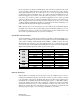
For one thing, there can only be one D/A conversion in the complete circuit depicted above – this
means that if the customer is on an analog switch in the CO, or if their loop circuit contains non-
integrated (line-side terminated) SLCs, they won’t be able to achieve a 56K connection. Certain
types of padding may also cause problems for 56K connections.
Another important consideration is whether the modems on the provider end support the same 56K
protocol – although a draft standard (V.90) is in place, most modems currently on the market will
support either K56flex™ (Rockwell/Lucent) or x2 (3Com/U.S. Robotics). These protocols are
not interoperable, and the next highest commonly support speed would be V.34. As V.90 modems
become more widely deployed, the interoperability issues should improve.