
Product manual


Page 3Fo r t e c h n i c a l q u e s t i o n s , p l e a s e c a l l 1 - 8 0 0 - 4 4 4 - 3 3 5 3 .Item 61747
12. When connecting the Battery Cables to the
battery, avoid creating sparks; especially when
the battery is being charged. Explosive gases
are created during charging. Sparking could
also damage the vehicle electrical system.
13. Do not touch the cooling vents on the Battery
Tester during or immediately after testing
the battery. They become very hot.
14. When placing the Battery Tester in the vehicle’s
engine compartment, take special care that
the metal housing of the Tester does not
come in contact with either terminal of the
battery or other electrical connections.
15. Be certain of the test battery polarity before
connecting the test Cable Clamps. The red Cable
Clamp goes to the positive terminal of the battery.
The black Cable Clamp goes to the negative terminal
of the battery. Reversing Battery Tester Cable
Clamps on the battery will damage the tester.
16. Do not drop the Battery Tester as it
may affect proper operation.
17. Do not smoke or have open flames near the battery.
18. Do not connect the Battery Tester to
the battery while the engine is running.
Turn the engine off before connecting.
19. The warnings and precautions discussed in this
manual cannot cover all possible conditions and
situations that may occur. It must be understood
by the operator that common sense and caution
are factors which cannot be built into this
product, but must be supplied by the operator.
SAV E TH ESE INSTRU CTIONS.
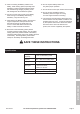
Sp e c i f i c a t i o n s
Testing
Capability
6 and 12 VDC battery tester
Load Test
Capacity
100 amps;
500 ~ 1000 cold cranking amps
Display Meters Analog, 0 ~ 16 VDC (max.)
Test Cycle
10 seconds per test with
1 minute cool down;
3 tests in 5 minutes
Battery Cable 16-3/4 IN. long including clamps
Clamps Copper plated clamps
SAFETYOPERATIONMAINTENANCE SPECIFICATIONS