
FAA Approved Airplane Flight Manual Supplement



Hawker Beechcraft 200, 200C, B200, B200C, 190-00915-02 Rev. 7
B200GT and B200CGT King Air
Page 156 of 179
The Terrain/Obstacle/Airport databases have an area of coverage as detailed below:
The terrain database has an area of coverage from North 90° Latitude to South 90° Latitude in all
longitudes.
The obstacle database has an area of coverage that includes the United States and Europe.
NOTE
The area of coverage may be modified, as additional terrain data sources become
available.
Obstacle and Terrain Alerts and Warnings
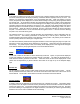
Obstacles and terrain displayed on the SVS system may be highlighted if an alert or warning is generated
by the G1000 Terrain or TAWS system. If an obstacle alert is presented for an obstacle that is in the SVS
field of view, the obstacle symbol on the PFD will turn yellow in color. If an obstacle warning is generated
by the G1000 system, the obstacle symbol on the PFD will turn red.
If the G1000 Terrain or TAWS system generates a terrain alert or warning, the terrain feature displayed on
the PFD will be colored yellow for an alert or red for a warning for as long as the alert remains valid.
Because the area monitored by the Terrain or TAWS system can be wider than the field of view that can
be displayed by the SVS system, it is possible to receive an obstacle or terrain audible alert for an obstacle
or terrain that is not shown on the SVS display. In those cases, the object generating the alert will be left
or right of the airplane. Refer to the other displays in the airplane to determine the cause of the message.
Flight Path Marker
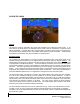
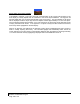
The SVS display includes a green circular barbed symbol called the Flight Path Marker (FPM) that
represents the current path of the airplane relative to the terrain display. The FPM is always displayed
when synthetic terrain is displayed and the airplane ground speed exceeds 30 kt. The FPM indicates the
current lateral and vertical path of the airplane as determined by the GPS sensor. If the FPM is above
the horizon line, the airplane is climbing, and similarly if the FPM is below the horizon line, the airplane is
descending. If the airplane is flying in a crosswind, the FPM will be offset from the center of the display.
In that case, the center of the PFD airplane reference symbol indicates the airplane heading and the FPM
indicates the direction that the airplane is actually moving, taking into account the crosswind.
The FPM indicates the current path of the airplane but does not predict the future path. If aircraft attitude,
power setting, airspeed, crosswind, etc. are changed, the FPM will move to indicate the new path resulting
from those changes.
If the FPM is below the terrain or obstacle displayed behind it on the PFD, the current aircraft path will not
clear that terrain or obstacle. If the FPM is above that terrain or obstacle, the airplane will clear the terrain
or obstacle IF, AND ONLY IF, THE CURRENT AIRCRAFT CONFIGURATION IS MAINTAINED, AND
THE AIRCRAFT PERFORMANCE WILL PERMIT YOU TO MAINTAIN THE CURRENT VERTICAL
(CLIMB) GRADIENT UNTIL PAST THE TERRAIN OR OBSTACLE.