
Pilot's Guide





190-00663-03 Rev. A
Garmin G1000 Pilot’s Guide for the Beechcraft C90A/GT/GTi
375
HAZARD AVOIDANCE
EXCESSIVE DESCENT RATE ALERT
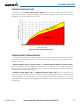
The purpose of the Excessive Descent Rate (EDR) alert is to provide suitable notification when the
aircraft is determined to be closing (descending) upon terrain at an excessive speed. Figure 6-87 shows the
parameters for the alert as defined by TSO-C151b.
0
500
1000
1500
2000
2500
3000
3500
4000
4500
5000
5500
6000
0
1000
2000
3000
4000
5000
6000
7000
8000
9000
10000
11000
12000
Descent Rate (FPM)
Height Above Terrain (Feet)
Caution: “SINK RATE”
Warning: “PULL-UP”
Figure 6-87 Excessive Descent Rate Alert Criteria
FORWARD LOOKING TERRAIN AVOIDANCE
The Forward Looking Terrain Avoidance (FLTA) feature of TAWS-B compares the aircraft’s projected flight
path with known terrain and obstacles in their respective databases and issues four types of alerts as either a
caution or a warning:
Reduced Required Terrain Clearance (RTC) and Reduced Required Obstacle Clearance (ROC)
alerts are issued when the aircraft flight path is above terrain, yet is projected to come within the minimum
clearance values in Figure 6-89. When an RTC alert is issued, the system displays a potential impact point
on navigation maps and the TAWS-B Page.
Imminent Terrain Impact (ITI) and Imminent Obstacle Impact (IOI) alerts are issued when the
aircraft is below the elevation of a terrain or obstacle cell in the aircraft’s projected path. ITI and IOI alerts
are accompanied by a potential impact point on the navigation maps and the TAWS-B Page. The alert is
annunciated when the projected vertical flight path is calculated to come within minimum clearance altitudes
in Figure 6-89.