
User Guide



190-00592-01 Rev. A
Garmin G1000 Pilot’s Guide for the Diamond DA40/40F
6-13
HAZARD AVOIDANCE
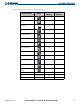
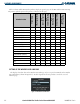
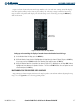
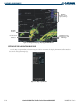
All weather product legends can be viewed on the Weather Data Link Page. For the NEXRAD legend (as
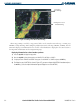
shown in Figure 6-12), press the LEGEND Softkey when NEXRAD is selected for display.
Figure 6-12 NEXRAD Data with Legend
The display of Radar Coverage is always active when both NEXRAD and ECHO TOPS are selected. The
display indicates the currently available NEXRAD Radar coverage and ECHO TOPS areas.
REFLECTIVITY
Reflectivity is the amount of transmitted power returned to the radar receiver. Colors on the NEXRAD
display are directly correlative to the level of detected reflectivity. Reflectivity as it relates to hazardous
weather can be very complex.
The role of radar is essentially to detect moisture in the atmosphere. Simply put, certain types of weather
reflect radar better than others. The intensity of a radar reflection is not necessarily an indication of the
weather hazard level. For instance, wet hail returns a strong radar reflection, while dry hail does not. Both
wet and dry hail can be extremely hazardous.
The different NEXRAD echo intensities are measured in decibels (dB) relative to reflectivity (Z). NEXRAD
measures the radar reflectivity ratio, or the energy reflected
back to
the radar receiver (
designated by the
letter Z)
. The value of Z increases as the returned signal strength increases.
NEXRAD LIMITATIONS
NEXRAD radar images may have certain limitations. These include but are not limited to:
• NEXRAD base reflectivity does not provide sufficient information to determine cloud layers or precipitation
characteristics (wet hail vs. rain). For example, it is not possible to distinguish between wet snow, wet
hail, and rain.