
User Guide




190-00494-00 Rev. B
Garmin G1000 Pilot’s Guide for the Cessna Citation Mustang
2-1
FLIGHT INSTRUMENTS
SECTION 2 FLIGHT INSTRUMENTS
2.1 INTRODUCTION
WARNING: In the event that the airspeed, attitude, altitude, or heading indications become unusable, refer
to the backup instruments.
NOTE: The Automatic Flight Control System (AFCS) provides additional readouts and bugs on selected flight
instruments. Refer to the AFCS Section for details on these bugs and readouts, as they appear on the display
during certain AFCS flight director modes.
Increased situational awareness is provided by replacing the traditional instruments on the panel with two easy-
to-scan Primary Flight Displays (PFDs) that feature large horizons, airspeed, attitude, altitude, vertical speed, and
course deviation information. In addition to the flight instruments, navigation, communication, terrain, traffic,
and weather information are also presented on the PFD and explained in other sections of this Pilot’s Guide.
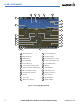
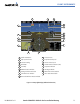
The following flight instruments and supplemental flight data are displayed on the PFD:
• Airspeed Indicator, showing
– Airspeed awareness ranges
– Trend vector
– Mach number
– Reference flags
• Attitude Indicator with slip/skid
indication
• Altimeter, showing
– Trend vector
– Barometric setting
– Selected Altitude
• Vertical Deviation, Glideslope,
and Glidepath Indicators
• Vertical Speed Indicator (VSI)
• Horizontal Situation Indicator,
showing
– Heading and course indications
– Turn Rate Indicator
– Navigation source
– Course Deviation Indicator
(CDI)
– Bearing pointers and
information windows
– DME Information Window
• Ram air temperature (RAT)
• ISA temperature deviation
• Timer/References Window,
showing
– Generic timer
– Vspeed values and flags
– Barometric minimum descent
altitude (MDA; or decision
height, DH)
– Destination elevation
– Flight ID (see Audio Panel and
CNS Section)
• System time
• Wind data
• Vertical Navigation indications
The PFD also displays various alerts and annunciations.