
User Guide




Garmin G1000 Pilot’s Guide for Cessna Citation Mustang
190-00494-00 Rev. B6-38
HAZARD AVOIDANCE
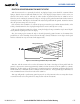
In areas of multiple heavy cells, use the Vertical Scan feature (Figure 6-42) along with antenna tilt
management to examine the areas. Remember to avoid shadowed areas behind targets.
Figure 6-42 The ‘Blind Alley’- Vertical Scan
TORNADOES
There are no conclusive radar target return characteristics which will identify a tornado. However,
tornadoes may be present if the following characteristics are observed:
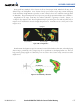
• A narrow, finger-like portion (Figure 6-40) extends and in a short time curls into a hook and closes on
itself.
• A “hook”, which may be in the general shape of the numeral 6, especially if bright and projecting from
the southwest quadrant (northeast quadrant in the southern hemisphere) of a major thunderstorm.
• V-shaped notches.
• Doughnut shapes.
These shapes do not always indicate tornadoes, and tornado returns are not limited to these characteristics.
Confirmed radar observations of tornadoes most often have not shown shapes different from those of a
normal thunderstorm display.
HAIL
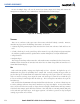
Hail results from updrafts carrying water high enough to freeze. Therefore, the higher the top of a
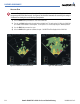
thunderstorm, the greater the probability that it contains hail. Vertically scanning the target return can
give the radar top of a thunderstorm that contains hail. Radar top is the top of a storm cell
as detected by
radar
. It is not the actual top, or true top of the storm. The actual top of a storm cell is seen with the eyes
in clear air and may be much higher than the radar top. The actual top does not indicate the top of the
hazardous area.
Hail can fall below the minimum reflectivity threshold for radar detection. It can have a film of water on
its surface, making its reflective characteristics similar to a very large water droplet. Because of this film of
water, and because hail stones usually are larger than water droplets, thunderstorms with large amounts
of wet hail return stronger signals than those with rain. Some hail shafts are extremely narrow (100 yards
or less) and make poor radar targets. In the upper regions of a cell where ice particles are ‘dry’ (no liquid
coating), target returns are less intense.