
Managing Faults on Virtual Services Platform 7200 Series and 8000 Series Version 5
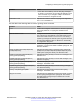
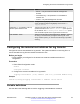
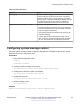
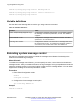
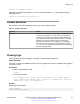
Table Of Contents
- Contents
- Chapter 1: Introduction
- Chapter 2: New in this document
- Chapter 3: Fault management fundamentals
- Chapter 4: Key Health Indicators using ACLI
- Chapter 5: Key Health Indicators using EDM
- Chapter 6: Link state change control using ACLI
- Chapter 7: Link state change control using EDM
- Chapter 8: RMON configuration using ACLI
- Chapter 9: RMON configuration using EDM
- Enabling RMON globally
- Enabling RMON on a port or VLAN
- Viewing the protocol directory
- Viewing the data source for protocol distribution statistics
- Viewing protocol distribution statistics
- Viewing the host interfaces enabled for monitoring
- Viewing address mappings
- Viewing the data source for host statistics
- Viewing network host statistics
- Viewing application host statistics
- Chapter 10: Log and trap fundamentals
- Chapter 11: Log configuration using ACLI
- Chapter 12: Log configuration using EDM
- Chapter 13: SNMP trap configuration using ACLI
- Chapter 14: SNMP trap configuration using EDM
- Glossary

Variable Value
• 2: Error — only error and more serious messages are
recorded
• 3: Manufacturing — this parameter is not available for
customer use
• 4: Fatal — only fatal messages are recorded
screen Configures the log display on the screen to on. Use the no form
of the command to stop the log display on the screen: no
logging screen
transferFile <1–10> address {A.B.C.D}
filename-prefix WORD<0–200
Transfers the syslog file to a remote FTP/TFTP server. <1–10>
specifies the file ID. The address {A.B.C.D} option specifies
the IP address. The filename-prefix WORD<0–200> option
sets the filename prefix for the log file at the remote host.
write WORD<1-1536> Writes the log file with the designated string. WORD<1-1536> is
the string or command that you append to the log file. If the
string contains spaces, you must enclose the string in quotation
marks (").
Configuring the remote host address for log transfer
Configure the remote host address for log transfer. The system transfers the current log file to a
remote host after the log file size reaches the maximum size.
Before you begin
• The IP address you configure for the remote host must be reachable at the time of
configuration.
Procedure
1. Enter Global Configuration mode:
enable
configure terminal
2. Configure the remote host address for log transfer:
logging transferFile {1-10} address {A.B.C.D} [filename WORD<0–255>]
Example
Switch:1(config)# logging transferFile 1 address 172.16.120.10
Variable definitions
Use the data in the following table to use the logging transferFile command.
Configuring the remote host address for log transfer
December 2015 Managing Faults on Avaya VSP 7200 Series and 8000 Series 63
Comments on this document? infodev@avaya.com