
Managing Faults on Virtual Services Platform 7200 Series and 8000 Series Version 5

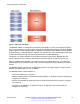

Table Of Contents
- Contents
- Chapter 1: Introduction
- Chapter 2: New in this document
- Chapter 3: Fault management fundamentals
- Chapter 4: Key Health Indicators using ACLI
- Chapter 5: Key Health Indicators using EDM
- Chapter 6: Link state change control using ACLI
- Chapter 7: Link state change control using EDM
- Chapter 8: RMON configuration using ACLI
- Chapter 9: RMON configuration using EDM
- Enabling RMON globally
- Enabling RMON on a port or VLAN
- Viewing the protocol directory
- Viewing the data source for protocol distribution statistics
- Viewing protocol distribution statistics
- Viewing the host interfaces enabled for monitoring
- Viewing address mappings
- Viewing the data source for host statistics
- Viewing network host statistics
- Viewing application host statistics
- Chapter 10: Log and trap fundamentals
- Chapter 11: Log configuration using ACLI
- Chapter 12: Log configuration using EDM
- Chapter 13: SNMP trap configuration using ACLI
- Chapter 14: SNMP trap configuration using EDM
- Glossary

Chapter 3: Fault management fundamentals
Fault management includes the tools and features available to monitor and manage faults. This
section provides overview for local alarms, remote monitoring (RMON), link stage changes (port
flapping), and Connectivity Fault Management.
Local alarms
The switch contains a local alarms mechanism. Local alarms are raised and cleared by applications
running on the switch. Active alarms are viewed using the show alarm database command in
ACLI. Local alarms are an automatic mechanism run by the system that do not require any
additional user configuration. Check local alarms occasionally to ensure no alarms require additional
operator attention. The raising and clearing of local alarms also creates a log entry for each event.
Remote Monitoring (RMON)
Remote Monitoring (RMON) is a management information base (MIB) or a group of management
objects that you use to obtain or configure values using the Simple Network Management Protocol
(SNMP). Use ACLI, or EDM, to globally enable RMON on the system. After you globally enable
RMON, you enable monitoring for individual devices on a port-by-port basis.
RMON1 is the original version of the protocol, which collects information for OSI Layer 1 and Layer
2 in Ethernet networks. RMON1 provides traffic statistics at the MAC layer, and provides statistics
on Ethernet segments for packets and bytes received and transmitted.
Note:
RMON1 (or legacy RMON) is not supported in VOSS 5.0 or later. However, RMON2 is still
supported.
The RMON2 feature monitors network and application layer protocols on configured network hosts,
either VLAN or port interfaces, that you enable for monitoring. The RMON2 feature expands the
capacity of RMON1 to upper layer protocols in the OSI model.
The following figure shows which form of RMON monitors which layers in the OSI model:
December 2015 Managing Faults on Avaya VSP 7200 Series and 8000 Series 13
Comments on this document? infodev@avaya.com