
Managing Faults on Virtual Services Platform 7200 Series and 8000 Series Version 5.1.2
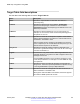
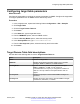
Table Of Contents
- Contents
- Chapter 1: Introduction
- Chapter 2: New in this document
- Chapter 3: Fault management fundamentals
- Chapter 4: Key Health Indicators using ACLI
- Chapter 5: Key Health Indicators using EDM
- Chapter 6: Link state change control using ACLI
- Chapter 7: Link state change control using EDM
- Chapter 8: Log and trap fundamentals
- Chapter 9: Log configuration using ACLI
- Configuring a UNIX system log and syslog host
- Configuring secure forwarding
- Installing root certificate for syslog client
- Configuring logging
- Configuring the remote host address for log transfer
- Configuring system logging
- Configuring system message control
- Extending system message control
- Viewing logs
- Configuring ACLI logging
- Chapter 10: Log configuration using EDM
- Chapter 11: SNMP trap configuration using ACLI
- Chapter 12: SNMP trap configuration using EDM
- Glossary

Configuring target table parameters
About this task
Configure the target table to configure the security parameters for SNMP. Configure the target table
to configure parameters such as SNMP version and security levels.
Procedure
1. In the navigation tree, expand the following folders: Configuration > Edit > SnmpV3.
2. Click Target Table.
3. Click the Target Params Table tab.
4. Click Insert.
5. In the Name box, type a target table name.
6. From the MPModel options, select an SNMP version.
7. From the Security Model options, select the security model.
8. In the SecurityName box, type readview or writeview.
9. From the SecurityLevel options, select the security level for the table.
10. Click Insert.
Target Params Table field descriptions
Use the data in the following table to use the Target Params Table tab.
Name
Description
Name Identifies the target table.
MPModel Specifies the message processing model to use to generate
messages: SNMPv1, SNMPv2c, or SNMPv3/USM.
SecurityModel Specifies the security model to use to generate messages:
SNMPv1, SNMPv2c, or USM. You can receive an
inconsistentValue error if you try to configure this variable to a
value for a security model that the implementation does not
support.
SecurityName Identifies the principal on whose behalf SNMP messages are
generated.
SecurityLevel Specifies the security level used to generate SNMP messages:
noAuthNoPriv, authNoPriv, or authPriv.
Configuring target table parameters
January 2017 Managing Faults on Avaya VSP 7200 Series and 8000 Series 67
Comments on this document? infodev@avaya.com