
Managing Faults on Virtual Services Platform 7200 Series and 8000 Series Version 5.1.2
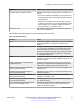
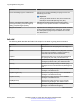
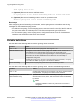
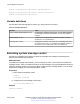
Table Of Contents
- Contents
- Chapter 1: Introduction
- Chapter 2: New in this document
- Chapter 3: Fault management fundamentals
- Chapter 4: Key Health Indicators using ACLI
- Chapter 5: Key Health Indicators using EDM
- Chapter 6: Link state change control using ACLI
- Chapter 7: Link state change control using EDM
- Chapter 8: Log and trap fundamentals
- Chapter 9: Log configuration using ACLI
- Configuring a UNIX system log and syslog host
- Configuring secure forwarding
- Installing root certificate for syslog client
- Configuring logging
- Configuring the remote host address for log transfer
- Configuring system logging
- Configuring system message control
- Extending system message control
- Viewing logs
- Configuring ACLI logging
- Chapter 10: Log configuration using EDM
- Chapter 11: SNMP trap configuration using ACLI
- Chapter 12: SNMP trap configuration using EDM
- Glossary

Switch:1(config)# sys msg-control max-msg-num 10
Switch:1(config)# sys msg-control control-interval 15
Switch:1(config)# sys msg-control
Variable definitions
Use the data in the following table to use the sys msg-control command.
Table 12: Variable definitions
Variable Value
action <both|send-trap|suppress-msg> Configures the message control action. You can either suppress
the message or send a trap notification, or both. The default is
suppress.
control-interval <1-30> Configures the message control interval in minutes. The valid
options are 1–30. The default is 5.
max-msg-num <2-500> Configures the number of occurrences of a message after which
the control action occurs. To configure the maximum number of
occurrences, enter a value from 2–500. The default is 5.
Extending system message control
Use the force message control option to extend the message control feature functionality to the
software and hardware log messages.
About this task
To enable the message control feature, you must specify an action, control interval, and maximum
message number. After you enable the feature, the log messages, which get repeated and cross the
maximum message number in the control interval, trigger the force message feature. You can either
suppress the message or send a trap notification, or both.
Procedure
1. Enter Global Configuration mode:
enable
configure terminal
2. Configure the force message control option:
sys force-msg WORD<4-4>
Example
Switch:1> enable
Log configuration using ACLI
January 2017 Managing Faults on Avaya VSP 7200 Series and 8000 Series 50
Comments on this document? infodev@avaya.com