
Managing Faults on Virtual Services Platform 7200 Series and 8000 Series Version 5.1.2
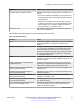
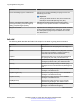
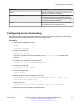
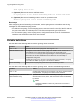
Table Of Contents
- Contents
- Chapter 1: Introduction
- Chapter 2: New in this document
- Chapter 3: Fault management fundamentals
- Chapter 4: Key Health Indicators using ACLI
- Chapter 5: Key Health Indicators using EDM
- Chapter 6: Link state change control using ACLI
- Chapter 7: Link state change control using EDM
- Chapter 8: Log and trap fundamentals
- Chapter 9: Log configuration using ACLI
- Configuring a UNIX system log and syslog host
- Configuring secure forwarding
- Installing root certificate for syslog client
- Configuring logging
- Configuring the remote host address for log transfer
- Configuring system logging
- Configuring system message control
- Extending system message control
- Viewing logs
- Configuring ACLI logging
- Chapter 10: Log configuration using EDM
- Chapter 11: SNMP trap configuration using ACLI
- Chapter 12: SNMP trap configuration using EDM
- Glossary

Variable Value
ip-header-type <circuitless-ip|default> Specifies the IP header in syslog packets to circuitless-ip or
default.
• If the value is default, the IP address of the VLAN is used
for syslog packets that are transmitted in-band using input/
output (I/O) ports.
• If the value is circuitless-ip, then for all syslog messages
(in-band or out-of-band), the circuitless IP address is used
in the IP header. If you configure multiple circuitless IPs,
the first circuitless IP configured is used.
max-hosts <1-10> Specifies the maximum number of syslog hosts supported,
from 1–10. The default is 5.
Use the data in the following table to use the syslog host command.
Table 8: Variable definitions
Variable Value
1–10 Creates and configures a host instance. Use the no operator
before this parameter, no syslog host to delete a host
instance.
address WORD <0–46> Configures a host location for the syslog host. WORD <0–
46> is the IPv4 or IPv6 address of the UNIX system syslog
host in the format A.B.C.D or x:x:x:x:x:x:x:x. You can log
system log messages to external system log hosts with both
IPv4 and IPv6 addresses with no difference in functionality
or configuration using ACLI.
enable Enables the syslog host. Use the no operator before this
parameter, no syslog host enable to disable syslog host. The
default is disabled.
facility {local0|local1|local2|local3|local4|
local5|local6|local7}
Specifies the UNIX facility in messages to the syslog host.
{local0|local1|local2|local3|local4|local5|local6|local7} is the
UNIX system syslog host facility. The default is local7.
maperror {emergency|alert|critical|error|
warning|notice|info|debug}
Specifies the syslog severity to use for error messages. The
default is error.
mapfatal {emergency|alert|critical|error|
warning|notice|info|debug}
Specifies the syslog severity to use for fatal messages. The
default is emergency.
mapinfo {emergency|alert|critical|error|
warning|notice|info|debug}
Specifies the syslog severity level to use for information
messages. The default is info.
mapwarning {emergency|alert|critical|error|
warning|notice|info|debug}
Specifies the syslog severity to use for warning messages.
The default is warning.
secure-forwarding mode [none] | [ssh] | [tls
server-cert-name WORD<1-64>]
Specifies the mode of secure forwarding of syslog on the
host. The default mode is none, that is, both ssh and tls
modes are disabled by default.
Table continues…
Configuring a UNIX system log and syslog host
January 2017 Managing Faults on Avaya VSP 7200 Series and 8000 Series 41
Comments on this document? infodev@avaya.com