
Managing Faults on Avaya Virtual Services Platform 7200 Series and 8000 Series Version 4.2.1
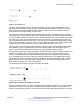
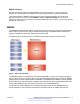
Table Of Contents
- Contents
- Chapter 1: Introduction
- Chapter 2: New in this release
- Chapter 3: Fault management fundamentals
- Chapter 4: Key Health Indicators using ACLI
- Chapter 5: Key Health Indicators using EDM
- Chapter 6: Link state change control using ACLI
- Chapter 7: Link state change control using EDM
- Chapter 8: RMON configuration using ACLI
- Chapter 9: RMON configuration using EDM
- Enabling RMON globally
- Enabling RMON on a port or VLAN
- Enabling RMON1 history
- Disabling RMON1 history
- Viewing RMON1 history statistics
- Creating an RMON1 alarm
- Creating an RMON1 port history alarm
- Viewing RMON1 alarms
- Deleting an RMON1 alarm
- Creating a default RMON1 event
- Creating a nondefault RMON1 event
- Viewing RMON1 events
- Viewing the RMON log
- Deleting an event
- Viewing the protocol directory
- Viewing the data source for protocol distribution statistics
- Viewing protocol distribution statistics
- Viewing the host interfaces enabled for monitoring
- Viewing address mappings
- Viewing the data source for host statistics
- Viewing network host statistics
- Viewing application host statistics
- Chapter 10: Viewing statistics using ACLI
- Chapter 11: Viewing statistics using EDM
- Chapter 12: Log and trap fundamentals
- Chapter 13: Log configuration using ACLI
- Chapter 14: Log configuration using EDM
- Chapter 15: SNMP trap configuration using ACLI
- Chapter 16: SNMP trap configuration using EDM
- Chapter 17: RMON alarm variables
- Glossary

RMON1 statistics
You can use EDM to gather and graph statistics in a variety of formats, or you can save the
statistics to a file and export the statistics to a third-party presentation or graphing application.
This implementation of RMON1 requires a control row for Ethernet statistics. This control row
appears as port 0/1 when you choose RMON > Control > Ethernet Statistics. The row ID is
reserved for the control row. Therefore, some automated tests, such as ANVL, can fail when the test
attempts to create a row 1.
RMON2
The RMON2 feature monitors network and application layer protocols on configured network hosts,
either VLAN or port interfaces, that you enable for monitoring. The RMON2 feature expands the
capacity of RMON1 to upper layer protocols in the OSI model.
The following figure shows which form of RMON monitors which layers in the OSI model:
Figure 3: OSI model and RMON
The RMON2 feature is a management information base (MIB) or a group of management objects
that you use to obtain or configure values using the Simple Network Management Protocol (SNMP).
Avaya supports a partial implementation of RMON2. The RMON2 feature adds the following MIBS:
protocol directory, protocol distribution, address map, network-layer host and application layer host
for the traffic passing through the (Control Processor) CP for these MIB tables.
The system only collects statistics for IP packets that pass through the CP. RMON2 does not
monitor packets on other interfaces processed on the switch that do not pass through the CP.
Remote Monitoring (RMON)
June 2015 Managing Faults on Avaya VSP 7200 Series and 8000 Series 19
Comments on this document? infodev@avaya.com