
Managing Faults on Avaya Virtual Services Platform 7200 Series and 8000 Series Version 4.2.1

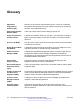
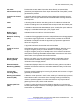
Table Of Contents
- Contents
- Chapter 1: Introduction
- Chapter 2: New in this release
- Chapter 3: Fault management fundamentals
- Chapter 4: Key Health Indicators using ACLI
- Chapter 5: Key Health Indicators using EDM
- Chapter 6: Link state change control using ACLI
- Chapter 7: Link state change control using EDM
- Chapter 8: RMON configuration using ACLI
- Chapter 9: RMON configuration using EDM
- Enabling RMON globally
- Enabling RMON on a port or VLAN
- Enabling RMON1 history
- Disabling RMON1 history
- Viewing RMON1 history statistics
- Creating an RMON1 alarm
- Creating an RMON1 port history alarm
- Viewing RMON1 alarms
- Deleting an RMON1 alarm
- Creating a default RMON1 event
- Creating a nondefault RMON1 event
- Viewing RMON1 events
- Viewing the RMON log
- Deleting an event
- Viewing the protocol directory
- Viewing the data source for protocol distribution statistics
- Viewing protocol distribution statistics
- Viewing the host interfaces enabled for monitoring
- Viewing address mappings
- Viewing the data source for host statistics
- Viewing network host statistics
- Viewing application host statistics
- Chapter 10: Viewing statistics using ACLI
- Chapter 11: Viewing statistics using EDM
- Chapter 12: Log and trap fundamentals
- Chapter 13: Log configuration using ACLI
- Chapter 14: Log configuration using EDM
- Chapter 15: SNMP trap configuration using ACLI
- Chapter 16: SNMP trap configuration using EDM
- Chapter 17: RMON alarm variables
- Glossary

Simple Network
Management
Protocol (SNMP)
SNMP administratively monitors network performance through agents and
management stations.
spanning tree A simple, fully-connected active topology formed from the arbitrary physical
topology of connected bridged Local Area Network components by relaying
frames through selected bridge ports. The protocol parameters and states
that are used and exchanged to facilitate the calculation of the active
topology and to control the bridge relay function.
Spanning Tree Group
(STG)
A collection of ports in one spanning-tree instance.
Trivial File Transfer
Protocol (TFTP)
A protocol that governs transferring files between nodes without protection
against packet loss.
User Datagram
Protocol (UDP)
In TCP/IP, a packet-level protocol built directly on the Internet Protocol
layer. TCP/IP host systems use UDP for application-to-application
programs.
user-based security
model (USM)
A security model that uses a defined set of user identities for authorized
users on a particular Simple Network Management Protocol (SNMP)
engine.
virtual router An abstract object managed by the Virtual Router Redundancy Protocol
(VRRP) that acts as a default router for hosts on a shared LAN.
virtual router
forwarding (VRF)
Provides traffic isolation between customers operating over the same node.
Each virtual router emulates the behavior of a dedicated hardware router by
providing separate routing functionality, and the network treats each VRF
as a separate physical router.
Virtual Router
Redundancy
Protocol (VRRP)
A protocol used in static routing configurations, typically at the edge of the
network. This protocol operates on multiple routers on an IP subnet and
elects a primary gateway router. When the primary router fails, a backup
router is quickly available to take its place.
Glossary
130 Managing Faults on Avaya VSP 7200 Series and 8000 Series June 2015
Comments on this document? infodev@avaya.com