
Managing Faults on Avaya Virtual Services Platform 7200 Series and 8000 Series Version 4.2.1
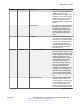
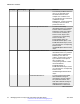
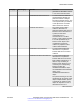
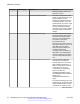
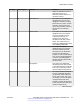
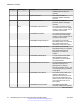
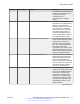
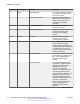
Table Of Contents
- Contents
- Chapter 1: Introduction
- Chapter 2: New in this release
- Chapter 3: Fault management fundamentals
- Chapter 4: Key Health Indicators using ACLI
- Chapter 5: Key Health Indicators using EDM
- Chapter 6: Link state change control using ACLI
- Chapter 7: Link state change control using EDM
- Chapter 8: RMON configuration using ACLI
- Chapter 9: RMON configuration using EDM
- Enabling RMON globally
- Enabling RMON on a port or VLAN
- Enabling RMON1 history
- Disabling RMON1 history
- Viewing RMON1 history statistics
- Creating an RMON1 alarm
- Creating an RMON1 port history alarm
- Viewing RMON1 alarms
- Deleting an RMON1 alarm
- Creating a default RMON1 event
- Creating a nondefault RMON1 event
- Viewing RMON1 events
- Viewing the RMON log
- Deleting an event
- Viewing the protocol directory
- Viewing the data source for protocol distribution statistics
- Viewing protocol distribution statistics
- Viewing the host interfaces enabled for monitoring
- Viewing address mappings
- Viewing the data source for host statistics
- Viewing network host statistics
- Viewing application host statistics
- Chapter 10: Viewing statistics using ACLI
- Chapter 11: Viewing statistics using EDM
- Chapter 12: Log and trap fundamentals
- Chapter 13: Log configuration using ACLI
- Chapter 14: Log configuration using EDM
- Chapter 15: SNMP trap configuration using ACLI
- Chapter 16: SNMP trap configuration using EDM
- Chapter 17: RMON alarm variables
- Glossary

Category Subcategory Variable Definition
etherStatsMulticastPkts The total number of good packets
received that are directed to a
multicast address. This number
does not include packets directed
to the broadcast address.
etherStatsCRCAlignErrors The total number of packets
received that had a length
(excluding framing bits, but
including FCS octets) of 64 to
1518 octets, inclusive, but had
either a bad Frame Check
Sequence (FCS) with an integral
number of octets (FCS Error) or a
bad FCS with a nonintegral
number of octets (Alignment
Error).
etherStatsUndersizePkts The total number of packets
received that are less than 64
octets long (excluding framing
bits, but including FCS octets)
and were otherwise well formed.
etherStatsOversizePkts The total number of packets
received that are longer than
1518 octets (excluding framing
bits, but including FCS octets)
and were otherwise well formed.
etherStatsFragments The total number of packets
received that are less than 64
octets in length (excluding
framing bits but including FCS
octets) and had either a bad
Frame Check Sequence (FCS)
with an integral number of octets
(FCS Error) or a bad FCS with a
nonintegral number of octets
(Alignment Error).
It is entirely normal for
etherStatsFragments to
increment because it counts both
runts (which are normal
occurrences due to collisions)
and noise hits.
etherStatsCollisions The best estimate of the total
number of collisions on this
Ethernet segment.
Table continues…
RMON alarm variables
120 Managing Faults on Avaya VSP 7200 Series and 8000 Series June 2015
Comments on this document? infodev@avaya.com