
Managing Faults on Avaya Virtual Services Platform 7200 Series and 8000 Series Version 4.2.1
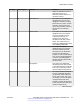
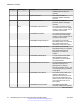
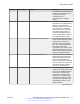
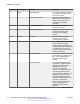
Table Of Contents
- Contents
- Chapter 1: Introduction
- Chapter 2: New in this release
- Chapter 3: Fault management fundamentals
- Chapter 4: Key Health Indicators using ACLI
- Chapter 5: Key Health Indicators using EDM
- Chapter 6: Link state change control using ACLI
- Chapter 7: Link state change control using EDM
- Chapter 8: RMON configuration using ACLI
- Chapter 9: RMON configuration using EDM
- Enabling RMON globally
- Enabling RMON on a port or VLAN
- Enabling RMON1 history
- Disabling RMON1 history
- Viewing RMON1 history statistics
- Creating an RMON1 alarm
- Creating an RMON1 port history alarm
- Viewing RMON1 alarms
- Deleting an RMON1 alarm
- Creating a default RMON1 event
- Creating a nondefault RMON1 event
- Viewing RMON1 events
- Viewing the RMON log
- Deleting an event
- Viewing the protocol directory
- Viewing the data source for protocol distribution statistics
- Viewing protocol distribution statistics
- Viewing the host interfaces enabled for monitoring
- Viewing address mappings
- Viewing the data source for host statistics
- Viewing network host statistics
- Viewing application host statistics
- Chapter 10: Viewing statistics using ACLI
- Chapter 11: Viewing statistics using EDM
- Chapter 12: Log and trap fundamentals
- Chapter 13: Log configuration using ACLI
- Chapter 14: Log configuration using EDM
- Chapter 15: SNMP trap configuration using ACLI
- Chapter 16: SNMP trap configuration using EDM
- Chapter 17: RMON alarm variables
- Glossary

Category Subcategory Variable Definition
on a particular MLT later than 512
bit-times into the transmission of
a packet; 512 bit-times
corresponds to 51.2
microseconds on a 10-Mb/s
system.
rcStatMltEtherMacTransmitError A count of frames where the
transmission on a particular MLT
fails due to an internal MAC
sublayer transmit error. A frame is
only counted by an instance of
this object if it is not counted by
the corresponding instance of
either the LateCollisions object,
the ExcessiveCollisions object, or
the CarrierSenseErrors object.
rcStatMltEtherCarrierSenseError The number of times the carrier
sense condition was lost or never
asserted when attempting to
transmit a frame on a particular
MLT. The count represented by
an instance of this object
increments at most once for each
transmission attempt, even if the
carrier sense condition fluctuates
during a transmission attempt.
rcStatMltEtherFrameTooLong A count of frames received on a
particular MLT that exceeds the
maximum permitted frame size.
The count represented by an
instance of this object increments
when the frameTooLong status is
returned by the MAC service to
the LLC (or other MAC user).
rcStatMltEtherMacReceiveError A count of frames for which
reception on a particular MLT fails
due to an internal MAC sublayer
receive error. A frame is only
counted by an instance of this
object if it is not counted by the
corresponding instance of either
the FrameTooLongs object, the
AlignmentErrors object, or the
FCSErrors object.
Table continues…
RMON alarm variables
June 2015 Managing Faults on Avaya VSP 7200 Series and 8000 Series 117
Comments on this document? infodev@avaya.com