
Managing Faults on Avaya Virtual Services Platform 7200 Series and 8000 Series Version 4.2.1
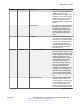
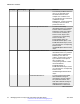
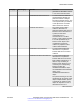
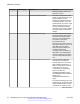
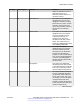
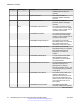
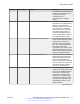
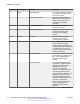
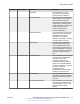
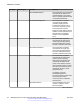
Table Of Contents
- Contents
- Chapter 1: Introduction
- Chapter 2: New in this release
- Chapter 3: Fault management fundamentals
- Chapter 4: Key Health Indicators using ACLI
- Chapter 5: Key Health Indicators using EDM
- Chapter 6: Link state change control using ACLI
- Chapter 7: Link state change control using EDM
- Chapter 8: RMON configuration using ACLI
- Chapter 9: RMON configuration using EDM
- Enabling RMON globally
- Enabling RMON on a port or VLAN
- Enabling RMON1 history
- Disabling RMON1 history
- Viewing RMON1 history statistics
- Creating an RMON1 alarm
- Creating an RMON1 port history alarm
- Viewing RMON1 alarms
- Deleting an RMON1 alarm
- Creating a default RMON1 event
- Creating a nondefault RMON1 event
- Viewing RMON1 events
- Viewing the RMON log
- Deleting an event
- Viewing the protocol directory
- Viewing the data source for protocol distribution statistics
- Viewing protocol distribution statistics
- Viewing the host interfaces enabled for monitoring
- Viewing address mappings
- Viewing the data source for host statistics
- Viewing network host statistics
- Viewing application host statistics
- Chapter 10: Viewing statistics using ACLI
- Chapter 11: Viewing statistics using EDM
- Chapter 12: Log and trap fundamentals
- Chapter 13: Log configuration using ACLI
- Chapter 14: Log configuration using EDM
- Chapter 15: SNMP trap configuration using ACLI
- Chapter 16: SNMP trap configuration using EDM
- Chapter 17: RMON alarm variables
- Glossary

Category Subcategory Variable Definition
object can represent a count of
transmission errors on a
particular interface that are not
otherwise counted.
IP ipInHdrErrors.0 The number of input datagrams
discarded due to errors in the
datagram IP headers, including
bad checksums, version number
mismatch, other format errors,
time-to-live exceeded, and errors
discovered in processing IP
options.
ipInDiscards.0 The number of discarded input IP
datagrams where no problems
were encountered to prevent
continued processing. An
example of why they were
discarded can be lack of buffer
space. This counter does not
include any datagrams discarded
while awaiting reassembly.
ipOutDiscards.0 The number of output IP
datagrams where no problems
were encountered to prevent
transmission to the destination,
but that were discarded (for
example, for lack of buffer space).
This counter includes datagrams
counted in ipForwDatagrams if
packets meet this (discretionary)
discard criterion.
ipFragFails.0 The number of IP datagrams
discarded because they needed
to be fragmented at this entity but
were not, for example, because
the Don't Fragment flag was set.
ipReasmFails.0 The number of failures detected
by the IP reassembly algorithm
(for whatever reason: timed out,
errors, and so forth). This is not
necessarily a count of discarded
IP fragments because some
algorithms (notably the algorithm
in RFC 815) can lose track of the
number of fragments by
Table continues…
RMON alarm variables
June 2015 Managing Faults on Avaya VSP 7200 Series and 8000 Series 115
Comments on this document? infodev@avaya.com