
Admin Guide


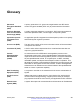
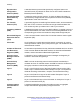


Table Of Contents
- Contents
- Chapter 1: Introduction
- Chapter 2: New in this document
- Chapter 3: Basic administration
- Chapter 4: System startup fundamentals
- Chapter 5: Boot parameter configuration using ACLI
- Chapter 6: Run-time process management using ACLI
- Chapter 7: Chassis operations
- Chassis operations fundamentals
- Chassis operations configuration using ACLI
- Enabling jumbo frames
- Configuring port lock
- Configuring SONMP
- Viewing the topology message status
- Associating a port to a VRF instance
- Configuring an IP address for the management port
- Configuring Ethernet ports with Autonegotiation
- Enabling channelization
- Configuring serial management port dropping
- Controlling slot power
- Enabling or disabling the USB port
- Chassis operations configuration using EDM
- Editing system information
- Editing chassis information
- Configuring system flags
- Configuring channelization
- Configuring basic port parameters
- Viewing the boot configuration
- Configuring boot flags
- Enabling Jumbo frames
- Configuring the date and time
- Associating a port to a VRF instance
- Configuring CP Limit
- Configuring an IP address for the management port
- Editing the management port parameters
- Configuring the management port IPv6 interface parameters
- Configuring management port IPv6 addresses
- Auto reactivating the port of the SLPP shutdown
- Editing serial port parameters
- Enabling port lock
- Locking a port
- Viewing power information
- Viewing power status on VSP 8400
- Viewing fan information
- Viewing topology status information
- Viewing the topology message status
- Configuring a forced message control pattern
- Chapter 8: Hardware status using EDM
- Chapter 9: Domain Name Service
- Chapter 10: Licensing
- Chapter 11: Network Time Protocol
- Chapter 12: Secure Shell
- Secure Shell fundamentals
- Secure Shell configuration using ACLI
- Downloading the software
- Enabling the SSHv2 server
- Changing the SSH server authentication mode
- Setting SSH configuration parameters
- Verifying and displaying SSH configuration information
- Connecting to a remote host using the SSH client
- Generating user key files
- Managing an SSL certificate
- Disabling SFTP without disabling SSH
- Enabling SSH rekey
- Configuring SSH rekey data-limit
- Configuring SSH rekey time-interval
- Displaying SSH rekey information
- Downgrading or upgrading from releases that support different key sizes
- Secure Shell configuration using Enterprise Device Manager
- Chapter 13: System access
- System access fundamentals
- System access configuration using ACLI
- Enabling ACLI access levels
- Changing passwords
- Configuring an access policy
- Specifying a name for an access policy
- Allowing a network access to the switch
- Configuring access policies by MAC address
- System access security enhancements
- Displaying the boot config flags status
- Enabling enhanced secure mode
- Creating accounts for different access levels
- Deleting accounts in enhanced secure mode
- Configuring a password for a specific user
- Returning the system to the factory defaults
- Configuring the password complexity rule
- Configuring the password length rule
- Configuring the change interval rule
- Configuring the reuse rule
- Configuring the maximum number of sessions
- Configuring the maximum age rule
- Configuring the pre- and post-notification rule
- System access configuration using EDM
- Chapter 14: ACLI show command reference
- Access, logon names, and passwords
- Basic switch configuration
- Current switch configuration
- CLI settings
- Ftp-access sessions
- Hardware information
- NTP server statistics
- Power summary
- Power information for power supplies
- System information
- System status (detailed)
- Telnet-access sessions
- Users logged on
- Port egress COS queue statistics
- CPU queue statistics
- Chapter 15: Port numbering and MAC address assignment reference
- Chapter 16: Supported standards, RFCs, and MIBs
- Glossary

Secure Shell (SSH) SSH uses encryption to provide security for remote logons and data
transfer over the Internet.
SFP A hot pluggable, small form-factor pluggable (SFP) transceiver, which is
used in Ethernet applications up to 1 Gbps.
Simple Loop
Prevention Protocol
(SLPP)
Simple Hello Protocol that prevents loops in a Layer 2 network (VLAN).
Simple Network
Management
Protocol (SNMP)
SNMP administratively monitors network performance through agents and
management stations.
single-mode fiber
(SMF)
One of the various light waves transmitted in an optical fiber. Each optical
signal generates many modes, but in single-mode fiber only one mode is
transmitted. Transmission occurs through a small diameter core
(approximately 10 micrometers), with a cladding that is 10 times the core
diameter. These fibers have a potential bandwidth of 50 to 100 gigahertz
(GHz) per kilometer.
SMLT aggregation
switch
One of two IST peer switches that form a split link aggregation group. It
connects to multiple wiring closet switches, edge switches, or customer
premise equipment (CPE) devices.
spanning tree A simple, fully-connected active topology formed from the arbitrary physical
topology of connected bridged Local Area Network components by relaying
frames through selected bridge ports. The protocol parameters and states
that are used and exchanged to facilitate the calculation of the active
topology and to control the bridge relay function.
Spanning Tree Group
(STG)
A collection of ports in one spanning-tree instance.
Trivial File Transfer
Protocol (TFTP)
A protocol that governs transferring files between nodes without protection
against packet loss.
trunk A logical group of ports that behaves like a single large port.
universal
asynchronous
receiver-transmitter
(UART)
A device that converts outgoing parallel data to serial transmission and
incoming serial data to parallel for reception.
User Datagram
Protocol (UDP)
In TCP/IP, a packet-level protocol built directly on the Internet Protocol
layer. TCP/IP host systems use UDP for application-to-application
programs.
Secure Shell (SSH)
January 2017 Administering Avaya VSP 7200 Series and 8000 Series 251
Comments on this document? infodev@avaya.com