
Performance Management on Virtual Services Platform 4000 Series Version 5.1.2
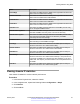
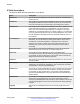
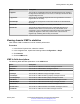
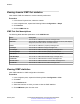
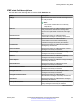
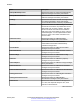
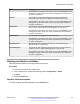
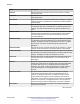
Table Of Contents
- Contents
- Chapter 1: Introduction
- Chapter 2: New in this document
- Chapter 3: Performance management fundamentals
- Chapter 4: Chassis performance management using EDM
- Chapter 5: Port performance management using ACLI
- Chapter 6: Port performance management using EDM
- Chapter 7: Statistics
- Viewing statistics using ACLI
- Viewing TCP statistics
- Viewing port routing statistics
- Displaying bridging statistics for specific ports
- Displaying DHCP-relay statistics for specific ports
- Displaying DHCP-relay statistics for all interfaces
- Viewing IPv6 DHCP Relay statistics
- Displaying LACP statistics for specific ports
- Displaying RMON statistics for specific ports
- Displaying detailed statistics for ports
- Displaying IS-IS statistics and counters
- Clearing ACL statistics
- Viewing ACE statistics
- Viewing MSTP statistics
- Viewing RSTP statistics
- Viewing RSTP port statistics
- Viewing MLT statistics
- Viewing vIST statistics
- Viewing IPv6 OSPF statistics
- Showing the EAPoL status of the device
- Showing EAPoL authenticator statistics
- Viewing EAPoL session statistics
- Viewing non-EAPoL MAC information
- Viewing port EAPoL operation statistics
- Showing RADIUS server statistics
- Viewing RMON statistics
- Displaying IPsec statistics
- Displaying IPsec statistics
- Viewing ICMP statistics
- Clearing IPv6 statistics
- Viewing IPv6 VRRP statistics
- Viewing IPv6 statistics on an interface
- Viewing IP VRRPv3 statistics
- Displaying VLACP statistics for specific ports
- Viewing statistics using EDM
- Graphing chassis statistics
- Graphing port statistics
- Viewing chassis system statistics
- Viewing chassis SNMP statistics
- Viewing chassis IP statistics
- Viewing chassis ICMP In statistics
- Viewing chassis ICMP Out statistics
- Viewing ICMP statistics
- Viewing chassis TCP statistics
- Viewing chassis UDP statistics
- Viewing port interface statistics
- Viewing port Ethernet errors statistics
- Viewing port bridging statistics
- Viewing port spanning tree statistics
- Viewing port routing statistics
- Viewing IPv6 statistics for an interface
- Viewing DHCP statistics for an interface
- Graphing DHCP statistics for a port
- Viewing DHCP statistics for a port
- Viewing IPv6 DHCP Relay statistics for a port
- Graphing DHCP statistics for a VLAN
- Displaying DHCP-relay statistics for Option 82
- Viewing LACP port statistics
- Viewing port policer statistics
- Displaying file statistics
- Viewing ACE port statistics
- Viewing ACL statistics
- Clearing ACL statistics
- Viewing VLAN and Spanning Tree CIST statistics
- Viewing VLAN and Spanning Tree MSTI statistics
- Viewing VRRP interface stats
- Viewing VRRP statistics
- Viewing SMLT statistics
- Viewing IPv6 VRRP statistics for an interface
- Viewing IPv6 VRRP statistics
- Viewing IP VRRPv3 statistics
- Viewing RSTP status statistics
- Viewing MLT interface statistics
- Viewing MLT Ethernet error statistics
- Viewing IPv6 OSPF statistics
- Displaying IPsec interface statistics
- Displaying switch level statistics for IPsec-enabled interfaces
- Viewing BGP global stats
- Viewing statistics for a VRF
- Viewing EAPoL Authenticator statistics
- Viewing EAPoL session statistics
- Viewing non-EAPoL MAC information
- Viewing Multihost status information
- Showing RADIUS server statistics
- Showing SNMP statistics
- Enabling RMON statistics
- Viewing RMON statistics
- Displaying IS-IS system statistics
- Displaying IS-IS interface counters
- Displaying IS-IS interface control packets
- Graphing IS-IS interface counters
- Graphing IS-IS interface sending control packet statistics
- Graphing IS-IS interface receiving control packet statistics
- Viewing statistics using ACLI
- Chapter 8: RMON configuration using ACLI
- Chapter 9: RMON configuration using EDM
- Enabling RMON globally
- Enabling RMON on a port or VLAN
- Enabling RMON1 history
- Disabling RMON1 history
- Viewing RMON1 history statistics
- Creating an RMON1 alarm
- Viewing RMON alarms
- Deleting an alarm
- Creating an RMON1 event
- Viewing RMON1 events
- Deleting an event
- Viewing the RMON log
- Viewing the protocol directory
- Viewing the data source for protocol distribution statistics
- Viewing protocol distribution statistics
- Viewing the host interfaces enabled for monitoring
- Viewing address mappings
- Viewing the data source for host statistics
- Viewing network host statistics
- Viewing application host statistics
- Chapter 10: Service Level Agreement Monitor
- Chapter 11: MACsec performance
- Chapter 12: RMON alarm variables

IP field descriptions
The following table describes parameters on the IP tab.
Name Description
InReceives The number of input datagrams received from interfaces, including those
received in error.
InHdrErrors The number of input datagrams discarded due to errors in the IP headers,
including bad checksums, version number mismatch, other format errors,
time-to-live exceeded, errors discovered in processing their IP options.
InAddrErrors The number of input datagrams discarded because the IP address in the IP
header destination field was not a valid address to be received at this
entity. This count includes invalid addresses (for example, 0.0.0.0) and
addresses of unsupported Classes (for example, Class E). For entities that
are not IP Gateways and therefore do not forward datagrams, this counter
includes datagrams discarded because the destination address was not a
local address.
ForwDatagrams The number of input datagrams for which this entity was not their final IP
destination, as a result of which an attempt was made to find a route to
forward them to that final destination. In entities that do not act as IP
Gateways, this counter includes only those packets that were Source-
Routed by way of this entity and had successful Source-Route option
processing.
InUnknownProtos The number of locally addressed datagrams received successfully but
discarded because of an unknown or unsupported protocol.
InDiscards The number of input IP datagrams for which no problems were
encountered to prevent their continued processing but that were discarded
(for example, for lack of buffer space). This counter does not include any
datagrams discarded while awaiting reassembly.
InDelivers The number of input datagrams successfully delivered to IP user-protocols
(including ICMP).
OutRequests The number of IP datagrams that local IP user-protocols (including ICMP)
supplied to IP in requests for transmission. This counter does not include
any datagrams counted in ipForwDatagrams.
OutDiscards The number of output IP datagrams for which no problem was encountered
to prevent their transmission to their destination, but that were discarded
(for example, for lack of buffer space). This counter includes datagrams
counted in ipForwDatagrams if any such packets met this (discretionary)
discard criterion.
OutNoRoutes The number of IP datagrams discarded because no route was found to
transmit them to their destination. This counter includes any packets
counted in ipForwDatagrams that meet this no-route criterion. This counter
includes any datagrams a host cannot route because all default gateways
are down.
FragOKs The number of IP datagrams that were successfully fragmented at this
entity.
Table continues…
Statistics
January 2017 Performance Management on Avaya VSP 4000 Series 92
Comments on this document? infodev@avaya.com