
Performance Management on Virtual Services Platform 4000 Series Version 5.1.2
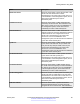
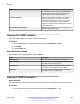
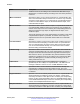
Table Of Contents
- Contents
- Chapter 1: Introduction
- Chapter 2: New in this document
- Chapter 3: Performance management fundamentals
- Chapter 4: Chassis performance management using EDM
- Chapter 5: Port performance management using ACLI
- Chapter 6: Port performance management using EDM
- Chapter 7: Statistics
- Viewing statistics using ACLI
- Viewing TCP statistics
- Viewing port routing statistics
- Displaying bridging statistics for specific ports
- Displaying DHCP-relay statistics for specific ports
- Displaying DHCP-relay statistics for all interfaces
- Viewing IPv6 DHCP Relay statistics
- Displaying LACP statistics for specific ports
- Displaying RMON statistics for specific ports
- Displaying detailed statistics for ports
- Displaying IS-IS statistics and counters
- Clearing ACL statistics
- Viewing ACE statistics
- Viewing MSTP statistics
- Viewing RSTP statistics
- Viewing RSTP port statistics
- Viewing MLT statistics
- Viewing vIST statistics
- Viewing IPv6 OSPF statistics
- Showing the EAPoL status of the device
- Showing EAPoL authenticator statistics
- Viewing EAPoL session statistics
- Viewing non-EAPoL MAC information
- Viewing port EAPoL operation statistics
- Showing RADIUS server statistics
- Viewing RMON statistics
- Displaying IPsec statistics
- Displaying IPsec statistics
- Viewing ICMP statistics
- Clearing IPv6 statistics
- Viewing IPv6 VRRP statistics
- Viewing IPv6 statistics on an interface
- Viewing IP VRRPv3 statistics
- Displaying VLACP statistics for specific ports
- Viewing statistics using EDM
- Graphing chassis statistics
- Graphing port statistics
- Viewing chassis system statistics
- Viewing chassis SNMP statistics
- Viewing chassis IP statistics
- Viewing chassis ICMP In statistics
- Viewing chassis ICMP Out statistics
- Viewing ICMP statistics
- Viewing chassis TCP statistics
- Viewing chassis UDP statistics
- Viewing port interface statistics
- Viewing port Ethernet errors statistics
- Viewing port bridging statistics
- Viewing port spanning tree statistics
- Viewing port routing statistics
- Viewing IPv6 statistics for an interface
- Viewing DHCP statistics for an interface
- Graphing DHCP statistics for a port
- Viewing DHCP statistics for a port
- Viewing IPv6 DHCP Relay statistics for a port
- Graphing DHCP statistics for a VLAN
- Displaying DHCP-relay statistics for Option 82
- Viewing LACP port statistics
- Viewing port policer statistics
- Displaying file statistics
- Viewing ACE port statistics
- Viewing ACL statistics
- Clearing ACL statistics
- Viewing VLAN and Spanning Tree CIST statistics
- Viewing VLAN and Spanning Tree MSTI statistics
- Viewing VRRP interface stats
- Viewing VRRP statistics
- Viewing SMLT statistics
- Viewing IPv6 VRRP statistics for an interface
- Viewing IPv6 VRRP statistics
- Viewing IP VRRPv3 statistics
- Viewing RSTP status statistics
- Viewing MLT interface statistics
- Viewing MLT Ethernet error statistics
- Viewing IPv6 OSPF statistics
- Displaying IPsec interface statistics
- Displaying switch level statistics for IPsec-enabled interfaces
- Viewing BGP global stats
- Viewing statistics for a VRF
- Viewing EAPoL Authenticator statistics
- Viewing EAPoL session statistics
- Viewing non-EAPoL MAC information
- Viewing Multihost status information
- Showing RADIUS server statistics
- Showing SNMP statistics
- Enabling RMON statistics
- Viewing RMON statistics
- Displaying IS-IS system statistics
- Displaying IS-IS interface counters
- Displaying IS-IS interface control packets
- Graphing IS-IS interface counters
- Graphing IS-IS interface sending control packet statistics
- Graphing IS-IS interface receiving control packet statistics
- Viewing statistics using ACLI
- Chapter 8: RMON configuration using ACLI
- Chapter 9: RMON configuration using EDM
- Enabling RMON globally
- Enabling RMON on a port or VLAN
- Enabling RMON1 history
- Disabling RMON1 history
- Viewing RMON1 history statistics
- Creating an RMON1 alarm
- Viewing RMON alarms
- Deleting an alarm
- Creating an RMON1 event
- Viewing RMON1 events
- Deleting an event
- Viewing the RMON log
- Viewing the protocol directory
- Viewing the data source for protocol distribution statistics
- Viewing protocol distribution statistics
- Viewing the host interfaces enabled for monitoring
- Viewing address mappings
- Viewing the data source for host statistics
- Viewing network host statistics
- Viewing application host statistics
- Chapter 10: Service Level Agreement Monitor
- Chapter 11: MACsec performance
- Chapter 12: RMON alarm variables

Name Description
conditions occur are, according to the conventions of IEEE 802.3 Layer
Management, counted exclusively according to the error status presented
to the LLC.
IMacTransmitError Specifies the frame count for which transmission on a particular MLT fails
due to an internal MAC sublayer transmit error. A frame is only counted by
an instance of this object if it is not counted by the corresponding instance
of either the LateCollisions object, the ExcessiveCollisions object, or the
CarrierSenseErrors object.
IMacReceiveError Specifies the frame count for which reception on a particular MLT fails due
to an internal MAC sublayer receive error. A frame is only counted by an
instance of this object if it is not counted by the corresponding instance of
either the FrameTooLongs object, the AlignmentErrors object, or the
FCSErrors object.
The precise meaning of the count represented by an instance of this object
is implementation specific. In particular, an instance of this object can
represent receive errors on a particular interface that are not otherwise
counted.
CarrierSenseError Specifies the number of times that the carrier sense condition was lost or
never asserted when attempting to transmit a frame on a particular MLT.
The count represented by an instance of this object increments at most
once for each transmission attempt, even if the carrier sense condition
fluctuates during a transmission attempt.
FrameTooLong Specifies the frame count received on a particular MLT that exceeds the
maximum permitted frame size. The count represented by an instance of
this object increments when the frameTooLong status is returned by the
MAC service to the LLC (or other MAC user). Received frames for which
multiple error conditions occur are, according to the conventions of IEEE
802.3 Layer Management, counted exclusively according to the error
status presented to the LLC.
SQETestError Specifies the number of times that the SQE test error message is
generated by the PLS sublayer for a particular MLT. The SQE test error
message is defined in section 7.2.2.2.4 of ANSI/ IEEE 802.3-1985.
DeferredTransmiss Specifies the frame count for which the first transmission attempt on a
particular MLT is delayed because the medium is busy. The count
represented by an instance of this object does not include frames involved
in collisions.
SingleCollFrames Specifies a count of successfully transmitted frames on a particular MLT for
which transmission is inhibited by exactly one collision. A frame that is
counted by an instance of this object is also counted by the corresponding
instance of either the ifOutUcastPkts object, the ifOutMulticastPkts object,
or the ifOutBroadcastPkts object, and is not counted by the corresponding
instance of the MultipleCollisionFrames object.
MultipleCollFrames Specifies the successfully transmitted frame count on a particular MLT for
which transmission is inhibited by more than one collision. A frame that is
counted by an instance of this object is also counted by the corresponding
Table continues…
Statistics
January 2017 Performance Management on Avaya VSP 4000 Series 126
Comments on this document? infodev@avaya.com