
Installation Instructions



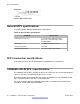
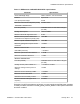


Table Of Contents
- Contents
- Chapter 1: Avaya Virtual Services Platform 4000 regulatory information and safety precautions
- International regulatory statements of conformity
- National electromagnetic compliance (EMC) statements of compliance
- FCC statement (USA only)
- ICES statement (Canada only)
- CE marking statement (Europe only)
- European Union and European Free Trade Association (EFTA) notice
- VCCI statement (Japan/Nippon only)
- BSMI statement (Taiwan only)
- MIC notice (Republic of Korea only)
- National Safety Statements of Compliance
- EN 60950 statement
- NOM statement (Mexico only)
- Información NOM (unicamente para México)
- Denan statement (Japan/Nippon only)
- National Environmental Statements of Compliance
- Restriction on Hazardous Substances Directive Compliance Statement
- WEEE Directive Compliance Statement
- Chapter 2: Introduction
- Chapter 3: New in this release
- Chapter 4: Safety and equipment care information
- Chapter 5: Small form factor pluggable transceivers
- Chapter 6: Small form factor pluggable plus transceivers
- Chapter 7: SFP specifications
- SFP labels
- General SFP specifications
- 1000BASE-T (RJ-45) SFP specifications
- 1000BASE-SX (LC) DDI SFP specifications
- 1000BASE-LX (LC) DDI SFP specifications
- 1000BASE-XD DDI 1310 nm SFP specifications
- 1000BASE-XD DDI 1550 nm SFP specifications
- 1000BASE-ZX DDI SFP specifications
- 1000BASE-XD CWDM (LC) SFP specifications
- 1000BASE-ZX CWDM (LC) SFP specifications
- 1000BASE-BX10 DDI SFP specifications
- 1000BASE-EX DDI SFP specifications
- 1000BASE-BX40 bidirectional SFP specifications
- 100BASE-FX SFP specifications
- Chapter 8: SFP+ specifications

Parameter Specifications
Line rate (8B/10B code) 1.25 Gb/s
Link optical power budget 30 dB
Maximum dispersion power penalty 2.0 dB at 120 km
Transmitter characteristics
Launch power 0 to 5.0 dBm
Receiver characteristics
Receiver sensitivity – 30 dBm
Maximum receiver power – 9.0 dBm
1000BASE-BX40 bidirectional SFP specifications
The 1000BASE-BX bidirectional SFPs (part numbers AA1419076-E6 and AA1419077-E6)
provide gigabit Ethernet connectivity over a single fiber.
The transmit and receive paths share the same fiber by using two different wavelengths. One
model transmits at 1310 nm and receives at 1490 nm, while the mating model transmits at
1490 nm and receives at 1310 nm. You can only connect a mating pair.
You can use 1000BASE-BX SFPs to double the number of your fiber links. For example, if you
have 20 installed fiber pairs with 20 conventional ports connected, you can use 1000BASE-
BX SFPs to expand to 40 ports, using the same fiber.
The long wavelength optical transceivers used in these models provide variable distance
ranges using single mode fiber optic cabling.
The 1000BASE-BX SFPs (part numbers AA1419076-E6 and AA1419077-E6) can attain a
reach of up to 40 km.
The following table describes standards, connectors, cabling, and distances for the
1000BASE-BX SFP.
Warning:
Risk of equipment damage
Connect 1000BASE-BX SFP AA1419076-E6 to 1000BASE-BX SFP AA1419077-E6 using
a single mode fiber with at least 6 dB of attenuation. Damage can result if insufficient
attenuation is provided or if the same 1000-BASE-BX SFPs are connected.
SFP specifications
52 Installation — SFP and SFP+ transceivers January 2014
Comments? infodev@avaya.com