
Installation Instructions



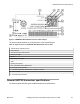


Table Of Contents
- Contents
- Chapter 1: Preface
- Chapter 2: New in this document
- Chapter 3: Safety and equipment care information
- Chapter 4: Supported transceiver, BOCs and DACs
- Chapter 5: Optical routing design
- Chapter 6: SFP
- Chapter 7: SFP+
- SFP+ transceivers
- SFP+ specifications
- SFP+ labels
- General SFP+ specifications
- Supported SFP+ transceivers
- 10GBASE-T SFP+ transceiver
- 10GBASE-LR/LW SFP+ specifications
- 10GBASE-LR/LW SFP+ high temperature (-5 °C to +85 °C) specifications
- 10GBASE-ER/EW SFP+ specifications
- 10GBASE-SR/SW SFP+ specifications
- 10GBASE-SR/SW SFP+ high temperature (0 °C to +85 °C) specifications
- 10GBASE-ZR/ZW SFP+ specifications
- 10GBASE-LRM SFP+ specifications
- 10GBASE-BX SFP+ specifications
- 10GBASE-CX specifications
- Chapter 8: QSFP+
- Chapter 9: QSFP28
- Chapter 10: End of sale transceivers and cables
- Chapter 11: Translations of safety messages
- Class A electromagnetic interference warning statement
- Electrostatic discharge warning statement
- Laser eye safety danger statement
- Laser eye safety connector inspection danger statement
- Connector cleaning safety danger statement
- Optical fiber damage warning statement
- Optical fiber connector damage warning statement
- SFP damage warning statement
- Glossary

Transceivers are keyed to prevent incorrect insertion. If the transceiver resists pressure, do not
force it; turn it over, and reinsert it.
Warning:
Risk of equipment damage
Only trained personnel can install this product.
About this task
Installing a transceiver takes approximately 3 minutes.
Procedure
1. Remove the transceiver from its protective packaging.
2. Grasp the transceiver between your thumb and forefinger.
3. Insert the device into the port on the module.
Apply a light pressure to the transceiver until the device clicks and locks into position in the
port.
4. Remove the dust cover from the transceiver optical bores, and insert the fiber optic cable.
Job aid
A typical QSFP28 transceiver uses the pull-tab type of locking and extractor mechanism.
The following figure shows transceiver with a bore plug installed. Pull the tab to release the device.
Removing a QSFP28 transceiver
Remove a QSFP 28 transceiver to replace it or to commission it elsewhere.
Before you begin
Danger:
Risk of eye injury by laser
Fiber optic equipment can emit laser or infrared light that can injure your eyes. Never look into
an optical fiber or connector port. Always assume that fiber optic cables are connected to a light
source.
QSFP28 transceivers
May 2018 Installing Transceivers and Optical Components on VOSS 65