
Design Reference



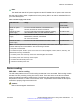

Table Of Contents
- Contents
- Chapter 1: Introduction
- Chapter 2: New in this release
- Chapter 3: Network design fundamentals
- Chapter 4: Hardware fundamentals and guidelines
- Chapter 5: Optical routing design
- Chapter 6: Platform redundancy
- Chapter 7: Link redundancy
- Chapter 8: Layer 2 loop prevention
- Chapter 9: Layer 2 switch clustering and SMLT
- Chapter 10: Layer 3 switch clustering and RSMLT
- Chapter 11: Layer 3 switch clustering and multicast SMLT
- Chapter 12: Spanning tree
- Chapter 13: Layer 3 network design
- Chapter 14: SPBM design guidelines
- Chapter 15: IP multicast network design
- Multicast and VRF-Lite
- Multicast and MultiLink Trunking considerations
- Multicast scalability design rules
- IP multicast address range restrictions
- Multicast MAC address mapping considerations
- Dynamic multicast configuration changes
- IGMPv3 backward compatibility
- IGMP Layer 2 Querier
- TTL in IP multicast packets
- Multicast MAC filtering
- Guidelines for multicast access policies
- Split-subnet and multicast
- Protocol Independent Multicast-Sparse Mode guidelines
- Protocol Independent Multicast-Source Specific Multicast guidelines
- Multicast for multimedia
- Chapter 16: System and network stability and security
- Chapter 17: QoS design guidelines
- Chapter 18: Layer 1, 2, and 3 design examples
- Glossary

This device is a Class A product. Operation of this equipment in a residential area is likely to
cause harmful interference, in which case users are required to take appropriate measures
necessary to correct the interference at their own expense.
Power specifications for VSP 4000 switches 4850GTS series and
4450GSX series
The following sections describe the regulatory AC and DC power specifications for the VSP 4000
series switches.
AC power specifications
The following table describes the regulatory AC power specifications for the 4850GTS series and
the 4450GSX-PWR+ switches. The regulatory power specifications are based on the maximum
rated capacity of the power supplies and are not based on typical power consumption, which is
lower.
Table 2: AC power specifications for 4850GTS series
Specifications 4850GTS 4850GTS-PWR+
Input Current 5A/2.5 A 16.66A/8.33 A
Input Voltage (rms) 100 to 240 VAC at 50 to 60 Hz 100 to 240 VAC at 50 to 60 Hz
Power Consumption Typical: 94.6 W
Maximum: 140 W
• Without PoE+
- Typical: 107 W
- Maximum: 145 W
• With PoE+
- Typical power utilization
depends on the number of
ports using PoE+.
- Maximum: 1705.2 W
Thermal Rating 323 BTU/hr maximum 508 BTU/hr maximum
Inrush Current 40 A maximum 70 A maximum
Turn on Condition 1 second maximum after
application of AC power
1 second maximum after
application of AC power
Important:
12–volt output rise time, from 10 to 90 percent, must be the maximum of 50 ms and monotonic under
all defined input and output conditions.
Efficiency 70 percent minimum 70 percent minimum
Hardware fundamentals and guidelines
20 Network Design Reference for Avaya VSP 4000 Series June 2015
Comments on this document? infodev@avaya.com