
Design Reference



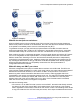


Table Of Contents
- Contents
- Chapter 1: Introduction
- Chapter 2: New in this release
- Chapter 3: Network design fundamentals
- Chapter 4: Hardware fundamentals and guidelines
- Chapter 5: Optical routing design
- Chapter 6: Platform redundancy
- Chapter 7: Link redundancy
- Chapter 8: Layer 2 loop prevention
- Chapter 9: Layer 2 switch clustering and SMLT
- Chapter 10: Layer 3 switch clustering and RSMLT
- Chapter 11: Layer 3 switch clustering and multicast SMLT
- Chapter 12: Spanning tree
- Chapter 13: Layer 3 network design
- Chapter 14: SPBM design guidelines
- Chapter 15: IP multicast network design
- Multicast and VRF-Lite
- Multicast and MultiLink Trunking considerations
- Multicast scalability design rules
- IP multicast address range restrictions
- Multicast MAC address mapping considerations
- Dynamic multicast configuration changes
- IGMPv3 backward compatibility
- IGMP Layer 2 Querier
- TTL in IP multicast packets
- Multicast MAC filtering
- Guidelines for multicast access policies
- Split-subnet and multicast
- Protocol Independent Multicast-Sparse Mode guidelines
- Protocol Independent Multicast-Source Specific Multicast guidelines
- Multicast for multimedia
- Chapter 16: System and network stability and security
- Chapter 17: QoS design guidelines
- Chapter 18: Layer 1, 2, and 3 design examples
- Glossary

Figure 70: Unsupported static RP configuration
Switches 10, 15, and 16 use static RP, whereas switch 2 uses dynamic RP. The source is at switch
10, and the receivers are switches 15 and 16. The RP is at switch 15 locally. The receiver on switch
16 cannot receive packets because its SPT goes through switch 2.
Switch 2 is in a dynamic RP domain, so it cannot learn about the RP on switch 15. However, (S, G)
records are created and deleted on switch 16 every 210 seconds.
Rendezvous point router considerations
You can place an RP on a switch when VLANs extend over several switches. However, when you
use PIM-SM, Avaya recommends that you not span VLANs on more than two switches.
Avaya recommends the use of Static group-range-to-RP mappings in an SMLT topology as
opposed to RP set learning via the Bootstrap Router (BSR) mechanism. Static RP allows for faster
convergence in box failure, reset and HA failover scenarios, whereas there are inherent delays in
the BSR mechanism as follows:
• When a router comes back up after a failover or reset, to accept and propagate (*,g) join
requests from surrounding routers (either PIM join messages or local IGMP membership
reports) to the RP, a PIM router must determine the address of the RP for each group for which
they desire (*,g) state. The PIM router must know the unicast route to the RP address. The
route to the RP address is learned by using a unicast routing protocol such as OSPF, and the
RP address is either statically configured or dynamically learned using the BSR mechanism.
• When a box comes up after a reset, if the RP is not statically configured, it must wait for the
BSR to select the RP from candidate RP routers, and then propagate the RP set hop-by-hop to
all PIM routers. This must be done before a join message can be processed. If the PIM router
receives a join message before it learns the RP set, it drops the join message, and the router
waits for another join or prune message to arrive before it creates the multicast route and
propagates the join message to the RP. The default Join/Prune timer is 60 seconds, and
because of this and the delays inherent in BSR RP-set learning, significant multicast traffic
interruptions can occur. If the RP is statically configured, the only delay is in the unicast routing
table convergence and the arrival of the Join/Prune messages from surrounding boxes.
IP multicast network design
140 Network Design Reference for Avaya VSP 4000 Series June 2015
Comments on this document? infodev@avaya.com