
Design Reference


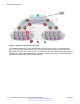
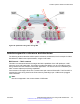


Table Of Contents
- Contents
- Chapter 1: Introduction
- Chapter 2: New in this release
- Chapter 3: Network design fundamentals
- Chapter 4: Hardware fundamentals and guidelines
- Chapter 5: Optical routing design
- Chapter 6: Platform redundancy
- Chapter 7: Link redundancy
- Chapter 8: Layer 2 loop prevention
- Chapter 9: Layer 2 switch clustering and SMLT
- Chapter 10: Layer 3 switch clustering and RSMLT
- Chapter 11: Layer 3 switch clustering and multicast SMLT
- Chapter 12: Spanning tree
- Chapter 13: Layer 3 network design
- Chapter 14: SPBM design guidelines
- Chapter 15: IP multicast network design
- Multicast and VRF-Lite
- Multicast and MultiLink Trunking considerations
- Multicast scalability design rules
- IP multicast address range restrictions
- Multicast MAC address mapping considerations
- Dynamic multicast configuration changes
- IGMPv3 backward compatibility
- IGMP Layer 2 Querier
- TTL in IP multicast packets
- Multicast MAC filtering
- Guidelines for multicast access policies
- Split-subnet and multicast
- Protocol Independent Multicast-Sparse Mode guidelines
- Protocol Independent Multicast-Source Specific Multicast guidelines
- Multicast for multimedia
- Chapter 16: System and network stability and security
- Chapter 17: QoS design guidelines
- Chapter 18: Layer 1, 2, and 3 design examples
- Glossary

Figure 60: Data center hosting private VLAN
The following list outlines the benefits of the hosted data center management solution:
• Easy endpoint provisioning
• Optimal resiliency
• Secure tenant separation
Video surveillance — bridged
In a video surveillance solution, optimal traffic forwarding is a key requirement to ensure proper
operation of the camera and recorder solutions. However, signaling is also important to ensure quick
channel switching. This is achieved by deploying a fabric connect based IP multicast infrastructure
that is optimized for multicast transport, so that the cameras can be selected quickly, and so that
there is no unnecessary traffic sent across the backbone.
Fabric connect enables this solution with support for ERS 8000, VSP 7000, VSP 9000, and the VSP
4000 products.
Solution-specific reference architectures
June 2015 Network Design Reference for Avaya VSP 4000 Series 117
Comments on this document? infodev@avaya.com