
Design Reference


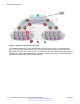
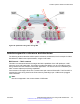


Table Of Contents
- Contents
- Chapter 1: Introduction
- Chapter 2: New in this release
- Chapter 3: Network design fundamentals
- Chapter 4: Hardware fundamentals and guidelines
- Chapter 5: Optical routing design
- Chapter 6: Platform redundancy
- Chapter 7: Link redundancy
- Chapter 8: Layer 2 loop prevention
- Chapter 9: Layer 2 switch clustering and SMLT
- Chapter 10: Layer 3 switch clustering and RSMLT
- Chapter 11: Layer 3 switch clustering and multicast SMLT
- Chapter 12: Spanning tree
- Chapter 13: Layer 3 network design
- Chapter 14: SPBM design guidelines
- Chapter 15: IP multicast network design
- Multicast and VRF-Lite
- Multicast and MultiLink Trunking considerations
- Multicast scalability design rules
- IP multicast address range restrictions
- Multicast MAC address mapping considerations
- Dynamic multicast configuration changes
- IGMPv3 backward compatibility
- IGMP Layer 2 Querier
- TTL in IP multicast packets
- Multicast MAC filtering
- Guidelines for multicast access policies
- Split-subnet and multicast
- Protocol Independent Multicast-Sparse Mode guidelines
- Protocol Independent Multicast-Source Specific Multicast guidelines
- Multicast for multimedia
- Chapter 16: System and network stability and security
- Chapter 17: QoS design guidelines
- Chapter 18: Layer 1, 2, and 3 design examples
- Glossary

Figure 59: Small core — multi-tenant
The following list outlines the benefits of the fabric connect-based solution:
• Endpoint provisioning
• Fast failover
• Simple to configure
• L2 and L3 virtualized
Hosted data center management solution — ETREE
In some hosted data center solutions, the hosting center operating company takes responsibility for
managing customer servers. For this shared management, shown in the following figure, servers
that control the operating system level of the production servers, such as the patch level, are
deployed. Because customer production servers do not communicate with each other, a distributed
private VLAN solution based on fabric connect is deployed to manage all production servers. This
solution builds a distributed set of ETREEs for each management domain.
VSP 9000, ERS 8000, VSP 7000 as core and VSP 4000 as access, provide an elegant network-
wide ETREE solution. Spokes, or managed servers, cannot communicate to each other over this
network, but the shared management servers on the hub ports can access all spokes. Because of
the Layer 2 – ETREE nature of this setup, the managed servers do not require any route entries,
and only require one IP interface in this management private VLAN. This solution supports tagged
and untagged physical and virtual (VM) servers.
SPBM design guidelines
116 Network Design Reference for Avaya VSP 4000 Series June 2015
Comments on this document? infodev@avaya.com