
Design Reference


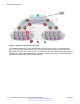
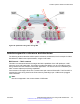


Table Of Contents
- Contents
- Chapter 1: Introduction
- Chapter 2: New in this release
- Chapter 3: Network design fundamentals
- Chapter 4: Hardware fundamentals and guidelines
- Chapter 5: Optical routing design
- Chapter 6: Platform redundancy
- Chapter 7: Link redundancy
- Chapter 8: Layer 2 loop prevention
- Chapter 9: Layer 2 switch clustering and SMLT
- Chapter 10: Layer 3 switch clustering and RSMLT
- Chapter 11: Layer 3 switch clustering and multicast SMLT
- Chapter 12: Spanning tree
- Chapter 13: Layer 3 network design
- Chapter 14: SPBM design guidelines
- Chapter 15: IP multicast network design
- Multicast and VRF-Lite
- Multicast and MultiLink Trunking considerations
- Multicast scalability design rules
- IP multicast address range restrictions
- Multicast MAC address mapping considerations
- Dynamic multicast configuration changes
- IGMPv3 backward compatibility
- IGMP Layer 2 Querier
- TTL in IP multicast packets
- Multicast MAC filtering
- Guidelines for multicast access policies
- Split-subnet and multicast
- Protocol Independent Multicast-Sparse Mode guidelines
- Protocol Independent Multicast-Source Specific Multicast guidelines
- Multicast for multimedia
- Chapter 16: System and network stability and security
- Chapter 17: QoS design guidelines
- Chapter 18: Layer 1, 2, and 3 design examples
- Glossary

Figure 56: Traditional routing after moving VMs
Optimized data center routing of VMs:
Two features make a data center optimized:
• VLAN routers in the Layer 2 domain (green icons)
• VRRP BackupMaster
The VLAN routers use lookup tables to determine the best path to route incoming traffic (red dots) to
the destination VM.
VRRP BackupMaster solves the problem of traffic congestion on the vIST. Because there can be
only one VRRP Master, all other interfaces are in backup mode. In this case, all traffic is forwarded
over the vIST link towards the primary VRRP switch. All traffic that arrives at the VRRP backup
interface is forwarded, so there is not enough bandwidth on the vIST link to carry all the aggregated
riser traffic. VRRP BackupMaster overcomes this issue by ensuring that the vIST trunk is not used in
such a case for primary data forwarding. The VRRP BackupMaster acts as an IP router for packets
destined for the logical VRRP IP address. All traffic is directly routed to the destined subnetwork and
not through Layer 2 switches to the VRRP Master. This avoids potential limitation in the available
vIST bandwidth.
The following figure shows a solution that optimizes your network for bidirectional traffic flows.
However, this solution turns two SPBM BCB nodes into BEBs where MAC and ARP learning will be
enabled on the Inter-VSN routing interfaces. If you do not care about top-down traffic flows, you can
omit the Inter-VSN routing interfaces on the SPBM BCB nodes. This makes the IP routed paths top-
down less optimal, but the BCBs remain pure BCBs, thus simplifying core switch configurations.
Reference architectures
June 2015 Network Design Reference for Avaya VSP 4000 Series 113
Comments on this document? infodev@avaya.com