
Design Reference
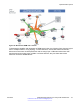




Table Of Contents
- Contents
- Chapter 1: Introduction
- Chapter 2: New in this release
- Chapter 3: Network design fundamentals
- Chapter 4: Hardware fundamentals and guidelines
- Chapter 5: Optical routing design
- Chapter 6: Platform redundancy
- Chapter 7: Link redundancy
- Chapter 8: Layer 2 loop prevention
- Chapter 9: Layer 2 switch clustering and SMLT
- Chapter 10: Layer 3 switch clustering and RSMLT
- Chapter 11: Layer 3 switch clustering and multicast SMLT
- Chapter 12: Spanning tree
- Chapter 13: Layer 3 network design
- Chapter 14: SPBM design guidelines
- Chapter 15: IP multicast network design
- Multicast and VRF-Lite
- Multicast and MultiLink Trunking considerations
- Multicast scalability design rules
- IP multicast address range restrictions
- Multicast MAC address mapping considerations
- Dynamic multicast configuration changes
- IGMPv3 backward compatibility
- IGMP Layer 2 Querier
- TTL in IP multicast packets
- Multicast MAC filtering
- Guidelines for multicast access policies
- Split-subnet and multicast
- Protocol Independent Multicast-Sparse Mode guidelines
- Protocol Independent Multicast-Source Specific Multicast guidelines
- Multicast for multimedia
- Chapter 16: System and network stability and security
- Chapter 17: QoS design guidelines
- Chapter 18: Layer 1, 2, and 3 design examples
- Glossary

multicast over Fabric Connect enabled, only receivers that are part of the same Layer 2 VSN can
receive that stream. Similarly, if a sender transmits a multicast stream to a BEB on a VLAN that is
part of the Layer 3 VSN with IP multicast over Fabric Connect enabled, only receivers that are part
of the same Layer 3 instance can receive that stream.
IP multicast over Fabric Connect uses BEBs to act as senders and receivers of data. After a BEB
receives IP multicast data from a sender, a BEB allocates a data I-SID in the range of 16,000,000 to
16,512,000 for the stream. The stream is identified by the S,G,V tuple, which is the source IP
address, group IP Address, and the stream is identified by the local VLAN on which the stream is
received. The BEB also sends a TLV update to its neighbors to inform them of the presence of an IP
multicast stream, along with identifying the sender. The BEB propagates the information through the
SPBM cloud through IS-IS TLV updates in LSPs that result in a multicast tree being created for that
stream.
IGMP handles group membership registration to enable members to receive data. IGMP snooping
listens to conversations between hosts and routers, and maintains a table of links that require IP
multicast streams.
The BEBs also act as IGMP queriers and send out periodic IGMP queries. The IGMP querier
enables the creation of the link table. After a BEB receives an IGMP join message from a receiver, a
BEB queries the IS-IS database to check if a sender exists for the requested stream within the
scope of the receiver. If the requested stream does not exist, the IGMP information is kept, but no
further action is taken. If the requested stream exists, the BEB sends an IS-IS TLV update to its
neighbors to inform them of the presence of a receiver and this information is propagated through
the SPBM cloud.
IS-IS acts dynamically using the TLV information it receives from BEBs that connect to the sender
and the receivers to create a multicast tree between them.
The following figure shows how multicast senders and receivers connect to the SPBM cloud using
BEBs.
Reference architectures
June 2015 Network Design Reference for Avaya VSP 4000 Series 109
Comments on this document? infodev@avaya.com